





The Marketing Stack Is Getting a Second Brain
Most B2B marketing teams are still operating like it’s 2023. One person, one tool, one task at a time. Write the email copy. Build the landing page. Score the leads. Pull the report. Repeat.
But that model is breaking. Not because teams aren’t working hard enough , because the volume of marketing operations has outpaced what linear human workflows can handle. The average B2B marketing team now manages 12+ tools, runs campaigns across 6+ channels, and is expected to deliver personalization that would have been science fiction three years ago.
Enter multi-agent AI systems. Instead of a single AI assistant helping with one task, multi-agent architectures deploy multiple specialized AI agents that work together , researching, writing, analyzing, routing, and optimizing , often without a human in the loop for hours at a time.
What Multi-Agent AI Actually Means for Marketing
If you’ve used a single AI tool like ChatGPT or Claude to draft a blog post, you’ve experienced single-agent AI. It’s useful but narrow. The agent does one thing, returns a result, and waits for your next instruction.
Multi-agent systems are fundamentally different. Instead of one brain, you have multiple specialized brains working in parallel or sequence. A research agent pulls competitive intelligence and audience data. A content agent drafts the campaign assets. A compliance agent reviews for brand voice and regulatory concerns. A routing agent distributes the final assets to the right channels. All of these agents talk to each other, share context, and hand off work without a human project manager micromanaging every step.
The result isn’t just faster execution , it’s execution at a level of consistency and personalization that’s impossible for human teams alone. An agent that’s trained on your entire brand voice, your customer data, your performance history, and your compliance rules doesn’t get tired. It doesn’t forget the style guide on the third revision. It doesn’t miss the personalization token in row 4,217 of your email list.
The Multi-Agent Difference
Single-agent AI automates a task. Multi-agent AI automates a workflow. The difference isn’t incremental , it’s architectural. When agents can hand off context to each other, you eliminate the friction of re-briefing, re-formatting, and re-explaining at every stage transition. That’s where the 4-10x time savings actually comes from.
The Agent Architecture That’s Actually Working
Not all multi-agent setups are created equal. After working with dozens of B2B marketing teams and running our own agent chains at KSS, we’ve identified five distinct agent types that form the backbone of most effective marketing workflows. Each has a specific role, and the magic happens in how they chain together.

Agent Types in Production Today
- Research Agents: Scan competitors, monitor industry news, pull CRM data, analyze buyer intent signals
- Content Agents: Draft copy across formats (email, social, blog, landing pages) with brand voice compliance
- Review Agents: Check for accuracy, brand alignment, regulatory compliance, and optimization opportunities
- Distribution Agents: Route content to the right channels, schedule for optimal timing, personalize per segment
- Analysis Agents: Track performance, surface anomalies, recommend optimizations, update attribution models
| Agent Type | Best Use Case | Typical Time Savings |
|---|---|---|
| Research Agent | Competitive intel, audience segmentation | 6-8 hours/week |
| Content Agent | Blog posts, email sequences, ad copy | 10-15 hours/week |
| Review Agent | Compliance, proofing, A/B variant generation | 4-6 hours/week |
| Distribution Agent | Multi-channel routing, scheduling, personalization | 3-5 hours/week |
| Analysis Agent | Reporting, attribution, optimization recommendations | 5-8 hours/week |
The teams seeing the biggest returns aren’t the ones with the most agents , they’re the ones with the cleanest handoffs between agents. When a research agent can pass structured data directly to a content agent, and that content agent can hand off to a review agent with context intact, you eliminate the single biggest source of marketing waste: context rebuild.
Where Multi-Agent Systems Create Immediate ROI
If you’re wondering where to start, don’t try to automate everything at once. The fastest path to ROI is targeting workflows that are high-volume, rules-based, and currently bottlenecked by human throughput. Here are the three workflows where we’re seeing the fastest payback:
1. Campaign Asset Production. A single campaign typically requires 15-40 distinct assets across channels. A multi-agent chain can produce all variants , email, social, landing page, ad copy, sales enablement , in under an hour with consistent messaging and correct personalization. Teams that previously spent 2-3 weeks on campaign asset production are running full campaigns in 2-3 days.
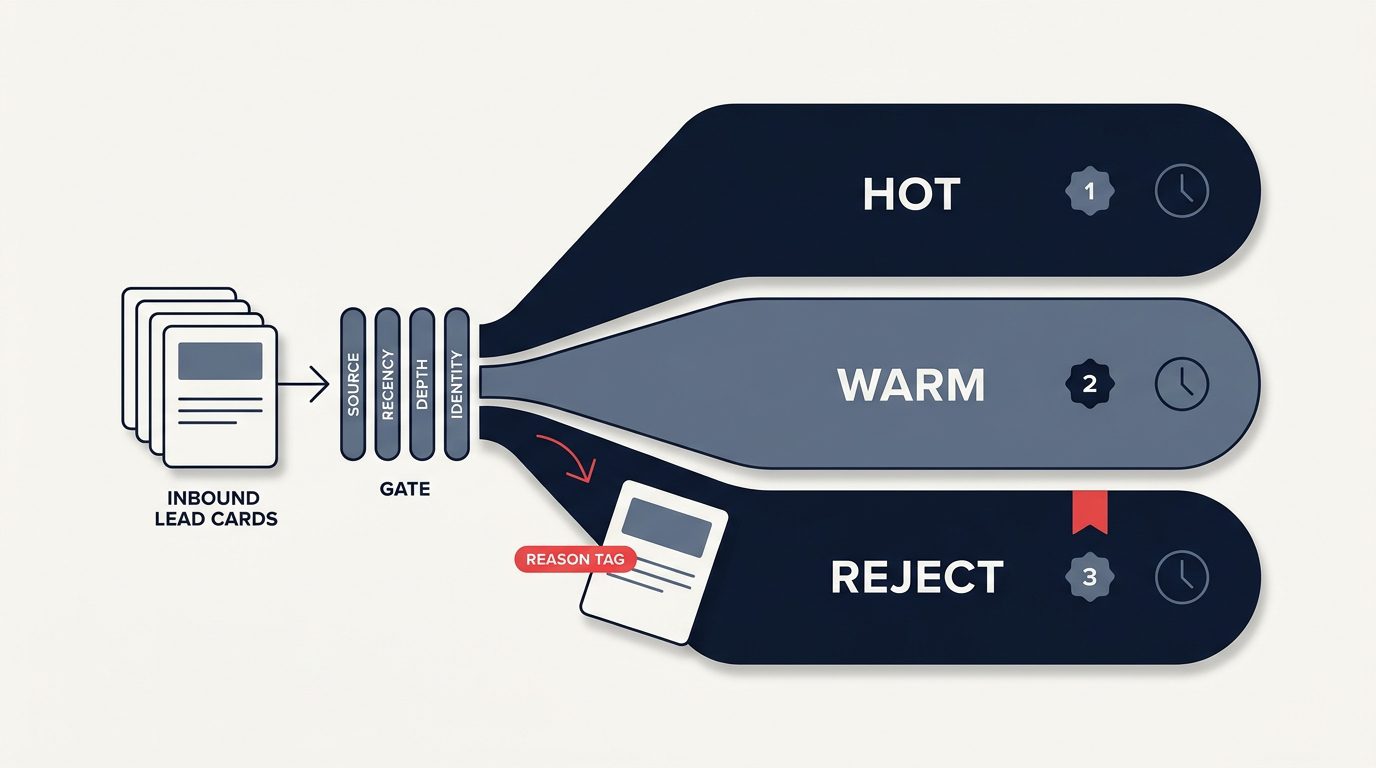
2. Lead Scoring and Routing. Traditional lead scoring is static and blunt. Multi-agent systems can analyze behavioral signals, firmographic data, intent data, and engagement history simultaneously , then route high-intent leads to sales within minutes instead of days. One enterprise B2B team we worked with cut their lead-to-contact time from 48 hours to 12 minutes using an agent chain.
3. Content Performance Optimization. Instead of running quarterly content audits, an analysis agent can continuously monitor every piece of content, flag underperformers, suggest updates, and even trigger a content agent to produce refreshed versions. This shifts content optimization from periodic fire drills to always-on improvement.
“The teams winning with AI in 2026 aren’t the ones with the best prompts. They’re the ones who’ve architected agent chains that hand off context without losing fidelity , and that’s a systems problem, not a prompting problem.”
Building Your First Agent Chain: The Practical Playbook
You don’t need a PhD in AI to start. What you need is a clear, repeatable workflow that’s currently draining your team’s time. Here’s the step-by-step approach we use at KSS:
Step 1: Map the workflow. Document every step, every handoff, every decision point in your current process. Don’t skip the ugly parts , those are where agents create the most value.
Step 2: Identify the context breaks. Where does information get lost between steps? Where do people have to re-explain, re-brief, or re-format? Those friction points are your agent handoff opportunities.
Step 3: Start with two agents. Pick the most painful handoff and build a two-agent chain. Research → Content is the most common starting point. Get that working reliably before adding a third.
Step 4: Add a review gate. Once your two-agent chain is stable, add a review agent as a quality checkpoint. This builds trust that the output will be accurate before you scale.
Step 5: Close the loop with analysis. The final maturity stage is adding an analysis agent that feeds performance data back into the research agent, creating a continuous improvement loop that gets smarter every cycle.
The teams that skip steps and try to build five-agent chains on day one almost always fail. The teams that start small and obsess over handoff quality end up with systems that compound in value every week.
The Organizational Shift Nobody Is Talking About
Implementing multi-agent AI isn’t just a technology decision , it’s an organizational one. The teams that succeed don’t just deploy agents; they redesign how work flows through the marketing organization.
The old model , where a marketing manager assigns tasks to specialists who execute in sequence , breaks down when agents enter the picture. The new model is closer to an orchestra conductor working with sections that can play autonomously. The marketing leader sets the strategy, defines the handoff points, and reviews output , but the production happens in parallel, not sequentially.
This requires a different skill set. The most valuable marketing hires in 2026 aren’t the best copywriters or the best designers. They’re the people who can design agent workflows, write effective system prompts that produce consistent output, and build quality gates that catch errors before they reach customers. Prompt engineering, workflow design, and AI quality assurance are becoming core marketing competencies , not nice-to-have technical skills.
The companies that invest in these organizational capabilities now will have a structural advantage that’s hard for competitors to replicate. Not because the technology is hard to access , it’s increasingly commoditized , but because the organizational learning curve is steep, and the teams that start early will have years of institutional knowledge about what works by the time everyone else catches up.
The bottom line: multi-agent AI isn’t a future trend. It’s already reducing campaign production cycles from weeks to days, cutting lead response times from hours to minutes, and enabling levels of personalization that were impossible 18 months ago. The question isn’t whether to adopt it , it’s whether you’ll build the organizational muscle before your competitors do.
Want to explore how multi-agent AI could reshape your marketing operations? Let’s talk about where agent chains fit in your stack.