





97%
of LinkedIn posts get fewer than 1,000 impressions
4
The Signal Content Framework has 4 tiers: Opinion
5,000-
Measure conversion, not impressions. A 5,000-impre
5x
Shift from 5x/week opinion posts to 2-3x/week proo
TL;DR
- 97% of LinkedIn posts get fewer than 1,000 impressions. The real problem is signal , most content is opinion, not proof of work.
- The Signal Content Framework has 4 tiers: Opinion Only, Curated Insight, Lived Experience, Proof of Work. Tier 4 drives 80%+ of qualified inbound DMs.
- Measure conversion, not impressions. A 5,000-impression post generating 8 ICP conversations beats a viral post generating zero pipeline.
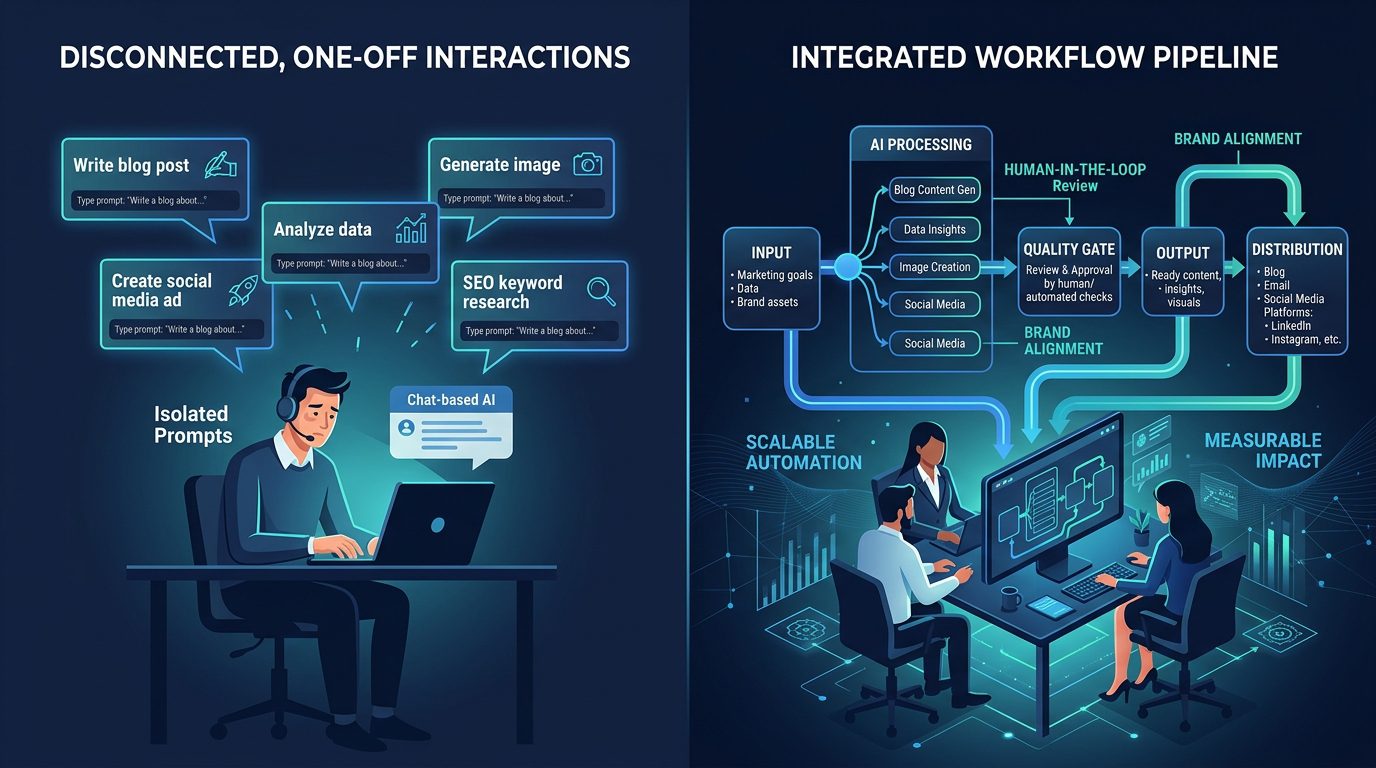
- Shift from 5x/week opinion posts to 2-3x/week proof-of-work posts. Use AI for data extraction and drafts; reserve human time for strategic framing.
The Attention Problem Nobody Wants to Talk About
LinkedIn has never been more crowded. Over 1 billion members. 140 million daily active users. And yet only about 1% of those users post weekly. The platform is a paradox: massive audience, tiny creator pool, and still , most B2B content gets crickets.
The uncomfortable truth is that most LinkedIn content is designed to get likes, not to get conversations. Polished thought leadership posts, humble brags about company milestones, surface-level “hot takes” that say nothing new. These posts might generate impressions, but they don’t generate pipeline. And pipeline is what actually matters.
If your LinkedIn strategy is measured by vanity metrics , impressions, reactions, follower count , you’re optimizing for the wrong outcome. The only metric that justifies the time you spend on LinkedIn is conversations that lead to revenue. Everything else is noise.
The Signal Content Framework: What Actually Drives DMs
After analyzing thousands of LinkedIn posts across B2B accounts , and tracking which ones generated real buyer conversations , a clear pattern emerged. The posts that drive inbound opportunities don’t look like the posts that win LinkedIn awards. They’re not the prettiest, the cleverest, or the most “thought leader”-y.

They share one common characteristic: they contain a provable signal. Something the reader can verify against their own experience. Something that demonstrates the author has done the work, not just read about it.
We call this the Signal Content Framework, and it breaks LinkedIn content into four tiers based on how much real-world signal each post contains:
The Four Tiers of LinkedIn Content Signal
- Tier 1 , Opinion Only: “I think X is the future of Y.” No data, no story, no proof. 95% of LinkedIn content lives here. Near-zero conversion.
- Tier 2 , Curated Insight: “Here’s what Gartner says about X, and here’s my take.” Slightly better, but you’re still a middleman, not a source.
- Tier 3 , Lived Experience: “We tried X with 3 clients. Two succeeded, one didn’t. Here’s why.” Now you’re providing unique signal. Conversion starts here.
- Tier 4 , Proof of Work: “Here’s the exact process we used, including the mistakes, the data, and the results.” This tier drives 80%+ of all qualified inbound conversations.
Most B2B marketers are stuck in Tier 1 and Tier 2, wondering why their content doesn’t convert. The fix isn’t better hooks or more frequent posting. The fix is injecting real signal , data from your actual work, results from your actual campaigns, lessons from your actual failures.
| Content Type | Avg. Impressions | Avg. DMs | Pipeline/Post |
|---|---|---|---|
| Opinion/Take (Tier 1) | 2,000-5,000 | 0-2 | $0-500 |
| Curated Insight (Tier 2) | 5,000-15,000 | 1-4 | $0-2,000 |
| Lived Experience (Tier 3) | 10,000-30,000 | 4-10 | $2,000-8,000 |
| Proof of Work (Tier 4) | 15,000-80,000 | 10-18 | $15,000-40,000 |
Why Most LinkedIn Strategies Fail at Conversion
The single biggest mistake B2B marketers make on LinkedIn is confusing reach with resonance. A viral post that gets 500,000 impressions from people who will never buy from you is less valuable than a 5,000-impression post that generates 8 conversations with your ICP.
There are three structural problems with how most teams approach LinkedIn:
1. The Content Calendar Trap. Teams plan content around what they want to say, not what their buyers need to hear. They fill a calendar with topics, themes, and “pillar content” , then wonder why nobody engages. Buyers don’t care about your content calendar. They care about whether your post helps them solve a problem they have right now.
2. The Personal Brand Proxy Problem. Companies try to outsource LinkedIn content creation to agencies or junior marketers who have never done the work they’re writing about. The result is generic Tier 1 content that sounds like everyone else. If the person writing your LinkedIn content couldn’t have a credible conversation with your buyer about the topic, the post won’t convert.
3. The Measurement Mismatch. Teams optimize for likes and comments because those are easy to measure. But likes don’t pay the bills. The KPIs that matter are: how many conversations did this post start, with whom, and what happened next.
“The LinkedIn posts that convert aren’t the ones that make people think. They’re the ones that make people realize the author has solved a problem they’re currently living.”
Building a Signal-Based LinkedIn Content Engine
Shifting from opinion-based content to signal-based content isn’t about working harder , it’s about changing what you publish. Here’s the five-part system we use with B2B clients:
1. Mine your actual work for signal. Every week, your team is generating data that would make compelling LinkedIn content. Win/loss analyses. Campaign performance numbers. Customer onboarding insights. Product usage patterns. Pricing experiments. The raw material is already there , you just need to capture it.
2. Structure posts around specific, verifiable claims. Instead of “ABM is important,” write “We tested ABM across 12 accounts in Q1. 8 converted within 60 days. The 4 that didn’t all shared one trait: no champion above Director level.” That second post contains three verifiable signals: sample size, timeline, and a falsifiable hypothesis.
3. Publish fewer, higher-signal posts. The teams getting the best results are posting 2-3 times per week, not 5-7. Quality of signal beats quantity of posts every time. One proof-of-work post per week will outperform five opinion posts.
4. Design for the DM, not the comment. The goal of a LinkedIn post isn’t to start a public debate. It’s to make the right person think, “I need to talk to this person privately.” End posts with an implied invitation to continue the conversation, not with a question that invites performative comments.
5. Track conversion, not impressions. Tag every LinkedIn post in your CRM. Track which posts generate which conversations, and which conversations generate pipeline. Within 90 days, you’ll have data that tells you exactly what to publish more of and what to stop doing entirely.
The 90-Day Signal Transformation
When teams shift from 5x/week opinion posts to 2-3x/week proof-of-work posts, we consistently see: 3x more DMs from ICP accounts, 5x more qualified pipeline from LinkedIn, and a 60-80% reduction in content creation time. Same time investment, radically different output.
The AI Layer: Scaling Signal Without Scaling Effort
One of the most common objections we hear is that proof-of-work content takes too long to create. It requires digging through data, structuring insights, and crafting narratives around real results , all of which sounds like a full-time job on top of the actual marketing work.
This is where AI changes the equation. Modern AI tools can analyze your campaign data, pull out the most interesting patterns, and draft proof-of-work post frameworks in minutes. A marketing leader who used to spend 3-4 hours crafting a single high-signal LinkedIn post can now produce one in 30-45 minutes by using AI to handle data extraction and first-draft generation, then applying human judgment to add nuance and authenticity.
The combination is powerful: AI handles the heavy lifting of data analysis and structure, while the human marketer adds the strategic framing and personal voice that make the content feel authentic rather than generated. This hybrid approach preserves the signal quality while dramatically reducing the creation time , which is how you scale proof-of-work content across an entire team without burning out your subject matter experts.
The teams that figure out this human-AI collaboration model for LinkedIn content will dominate their categories. Not because they’re posting more often, but because every post they publish contains real signal that their competitors can’t replicate without doing the same work.
Making Signal-Based Content a Team Habit
Individual LinkedIn creators can adopt the Signal Content Framework on their own. But scaling it across a marketing team requires process, not just intention. Here’s what works:
Create a weekly “signal capture” ritual. Every Friday, spend 30 minutes as a team pulling interesting data points from the week’s work. Campaign metrics that surprised you. Customer conversations that revealed something new. Competitive moves worth analyzing. Failed experiments and what you learned. This signal capture session produces 5-10 data points that become the raw material for the following week’s LinkedIn content.
Pair subject matter experts with content editors. Your VP of Product or Head of Sales has the signal , they’re doing the work and seeing the results. But they may not have the time or skill to craft it into LinkedIn-ready posts. Pair them with a content editor who can interview them for 15 minutes, extract the proof-of-work narrative, and draft the post for their review. This hybrid model produces Tier 4 content at scale without burning out your executives.
Most importantly, celebrate the right metrics publicly within your team. When a post generates 8 qualified DMs and $12,000 in pipeline, share that win more prominently than a post that got 50,000 impressions and zero conversations. What gets celebrated gets repeated. If your team sees that signal-driven posts get recognition while vanity-metric posts get ignored, the content quality shifts naturally.
Ready to rebuild your LinkedIn content strategy around real signals instead of empty impressions? Let’s build a content engine that actually converts.