


Meta description: AI scoring works when qualification, routing, and follow-up operate as one system. Here’s how to turn buyer signals into higher conversion and revenue.
TL;DR
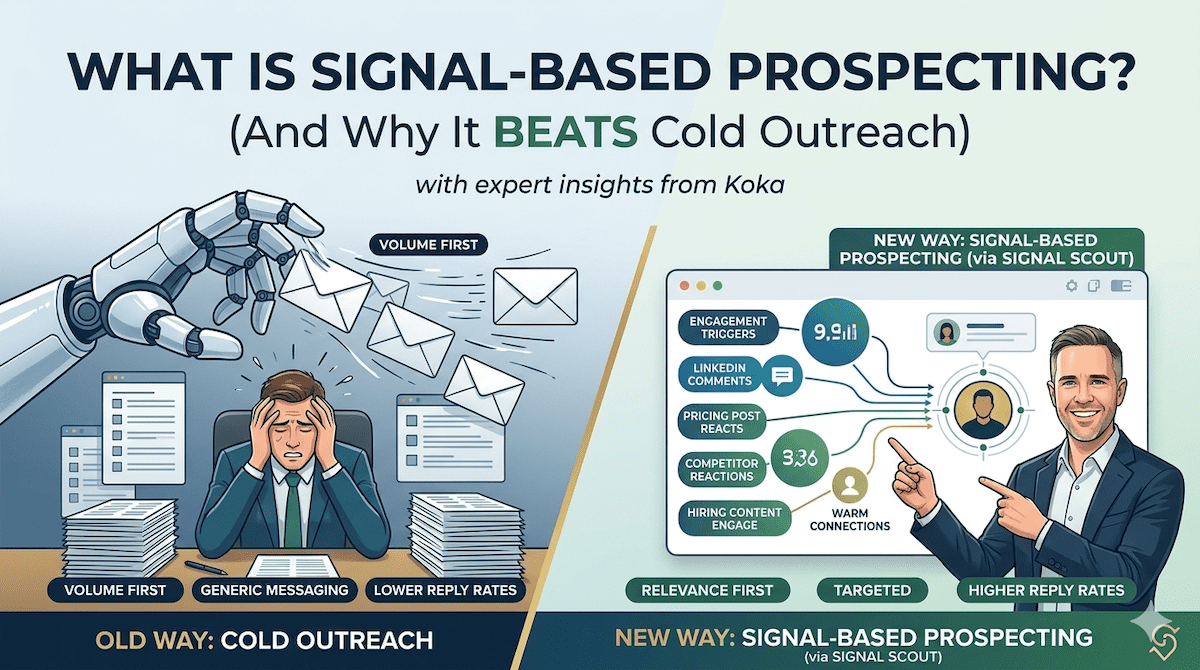
Most teams do not have a lead problem. They have a prioritization problem. AI helps when it decides who deserves attention now, what follow-up should happen next, and which signals actually predict movement instead of vanity activity.
- AI-driven qualification is strongest when it combines fit, behavior, timing, and routing.
- Adobe found 87% of senior executives expect AI in customer journeys and marketing workflows to deliver measurable returns by the end of 2025.
- In Adobe’s Qualcomm case study, better lead quality and scoring produced a 40% uplift in lead quality and a 25% increase in conversion rates.
- Salesforce reports that 9 in 10 sales teams already use agents or expect to within two years, which tells you this is becoming operating table stakes.
That is why AI lead qualification matters. It helps revenue teams separate curiosity from intent and timing from actual sales readiness. When that logic is wired into routing, follow-up, and nurture, reps stop wasting time on the wrong accounts and start working the right ones earlier.
| Benchmark | What it says | Why it matters |
|---|---|---|
| Adobe AI and Digital Trends in B2B Journeys, 2025 | 42% of B2B organizations use data to predict customer needs by segment or persona | The market is already moving toward signal-driven qualification |
| Adobe AI and Digital Trends in B2B Journeys, 2025 | 87% of senior executives expect measurable AI returns by the end of 2025 | Leadership now expects AI to produce business outcomes, not experiments |
| Salesforce State of Sales, 2026 | 9 in 10 sales teams use agents or expect to within two years | AI-assisted selling is moving from edge case to default |
| Qualcomm case study in Adobe report | 40% uplift in lead quality and scoring, plus 25% higher conversion rates | Better scoring can create downstream commercial impact fast |
Scoring fails when it stays trapped in marketing ops
Most lead scoring projects die for a simple reason: they rank leads but change nothing operationally. A dashboard score without a workflow is theater.
I have seen teams buy expensive tooling, build a score, and then route every lead to sales exactly the same way they did before. Nothing improves because the system did not change behavior.
The better model is to treat qualification as a live decision layer. Pull firmographic fit, engagement recency, buying-group activity, channel history, and sales context into one view. Then decide one of four actions: route now, nurture harder, enrich more, or disqualify.
If you want the broader engine behind this, look at Lead Generation & AI Automations and Accelerate Pipeline Growth with AI-Powered Lead Generation and Automation. The stack only matters if it improves speed, prioritization, and handoff quality.
Bad scoring does not just miss good leads. It teaches the revenue team to stop trusting its own system.

What high-performing AI qualification actually looks like
The strongest programs do not score leads on engagement alone. They blend four signal categories:
- Fit: ICP match, role relevance, company size, industry, and tech stack.
- Behavior: high-intent visits, repeat sessions, form depth, email interaction, and content consumption patterns.
- Timing: buying-stage clues, recent trigger events, and response windows.
- Commercial context: open opportunities, existing customers, partner influence, and rep activity.
That blend is where predictive lead scoring earns its keep. Instead of rewarding top-of-funnel noise, it identifies patterns that resemble real pipeline creation and closed-won behavior.
The Adobe report adds a strong proof point through Qualcomm. By improving how sales and marketing used Marketo Engage, Qualcomm reported a 40% uplift in lead quality and scoring and a 25% increase in conversion rates. Better qualification changes downstream economics.
Salesforce’s 2026 sales research points the same direction from the sales side. Teams are using AI for account research, prioritization, follow-up, and next-best-action support because those are the points where rep time gets wasted fastest. One Salesforce contributor described AI as freeing sellers to spend less time managing the process of selling and more time actually selling. That is the bridge between better qualification and better revenue.
If you want the broader strategic context, AI in B2B Marketing: 2025 Analyst Report for CMOs and How Automation and AI Are Rewiring B2B Growth make the same case from a wider GTM angle.
The revenue lift comes from action, not the score itself
If you want double-digit revenue impact, stop asking whether the score is “accurate” in the abstract. Ask whether it changes who gets worked, how fast follow-up happens, and how relevant the next touch feels.
That is where AI lead qualification becomes commercially useful. The best programs connect score thresholds to clear actions:

- Hot accounts route immediately to the right owner, not a generic queue.
- Mid-band accounts trigger personalized nurture, enrichment, or retargeting.
- Low-fit contacts stay out of rep workflows and out of forecast noise.
- Model feedback loops retrain on pipeline progression, not just marketing engagement.
I would rather deploy a simple model the team trusts than a complex model nobody acts on. Precision without adoption is just a prettier form of waste.
Used well, predictive lead scoring reduces response lag, improves conversion efficiency, and helps marketing and sales focus on the same definition of quality. That is where the over-10% revenue upside becomes realistic. Not because AI is magic, but because the business finally stops leaking time and attention across bad-fit leads, mistimed outreach, and weak handoffs.
If your team is still treating qualification like a static spreadsheet exercise, that is the bottleneck. Build the model, then wire it into routing, follow-up, and feedback.
Talk with Koka about building an AI-driven qualification engine

Featured Videos from Learning Paths
One quick watch from each curated path.