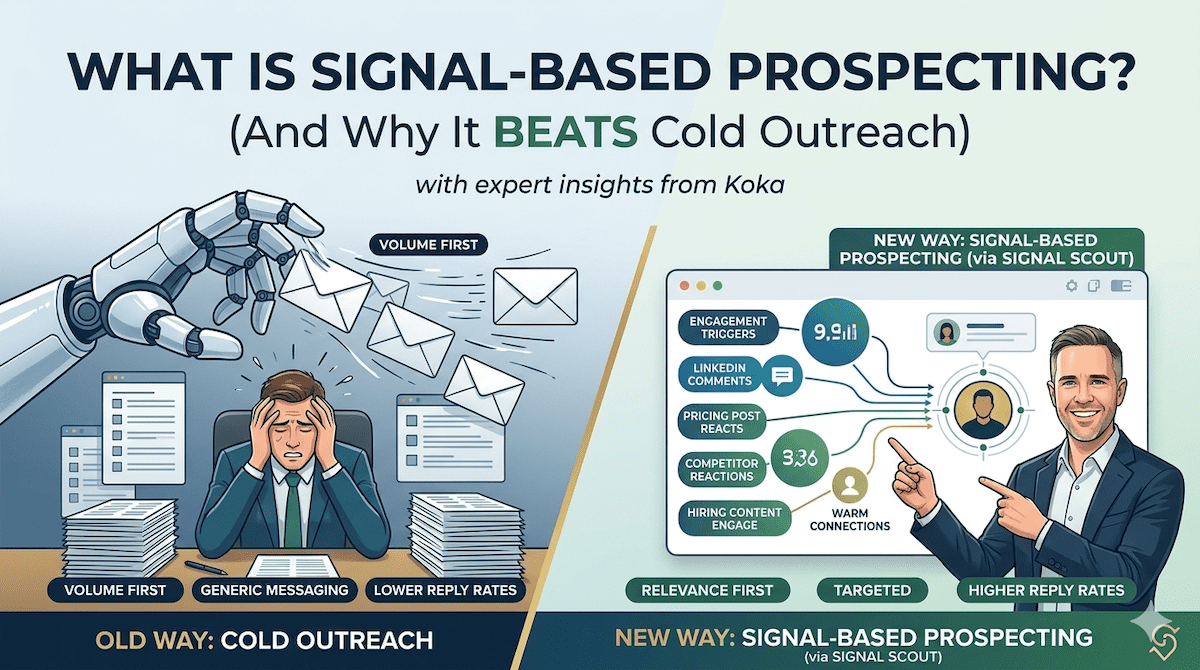



Every B2B marketing team wants more pipeline. Yet most chase cold lists while ignoring the warmer, easier-to-convert list already sitting in plain sight — their LinkedIn followers.
Those followers have already said “yes” to your brand by choosing to follow you. That simple act changes everything: it signals awareness, trust, and potential buying intent. If you treat that signal correctly, you can move faster, close smarter, and build pipeline without additional ad spend.
Cold outreach forces you to earn every ounce of attention. Follower conversion lets you leverage existing familiarity to skip the noise and start real conversations sooner.
This article unpacks why most teams get it wrong — and how to fix it with a clear, repeatable system you can run every week.
The Real Reason Follower Conversion Fails

4
Follower conversion is simple in theory: visibility creates opportunity. The problem? Most teams stop at visibility.
A follower isn’t a lead, but it’s a warm signal — proof that your content resonated with the right person. If you don’t act on that data, you waste one of the most cost-efficient assets in your GTM system.
Think of it this way:
- A cold list says “maybe.”
- A follower list says “I see you.”
That subtle difference shortens your outreach cycle dramatically. You don’t have to build recognition; you only have to validate relevance.
When followers engage — view, comment, or click — they’re effectively raising a hand. Treat that engagement as a buying-stage indicator, not a vanity metric.
For a deeper perspective, read Adaptive GTM: Why B2B Marketing Needs to Shift from Campaigns to Systems. It explains how signal-led growth frameworks replace random campaigns with structured, repeatable systems.
Follower conversion works because it prioritizes signal over spray. You’re not tricking anyone into a meeting — you’re helping interested people find a natural next step.
A quick example
A founder follows your page after attending a webinar. A week later, you post a short video answering a question they left in chat. When they comment again, your SDR replies with a short note offering a deeper resource. That’s not “outbound.” That’s context-driven follow-up — the kind of engagement that scales authenticity and shortens cycles.
Small teams thrive here. You don’t need massive reach; you need a tight, warm list and a disciplined system. That’s how you out-convert larger teams still stuck in cold mode.
The One-Day Fix: Your Follower Conversion Workflow

5
Follower conversion isn’t complex — it just needs structure. Here’s a one-day workflow to turn your warm audience into a clean, actionable list:
1. Check segmentation
Who are your followers? Filter by role, seniority, and industry. Prioritize ICP matches and recent engagers (within 90 days). Those people already know your voice.
2. Check enrichment rate
Incomplete data slows everything down. Use tools like LinkedIn Sales Navigator, Clay, or Apollo to fill missing fields — company size, title, and email. Your CRM will thank you.
3. Check CTR (Click-Through Rate)
Analyze which posts your ICP engaged with. The patterns tell you what resonates — and what your outreach message should lead with.
4. Check reply quality
Warm doesn’t always mean ready. Track reply quality, not just response rate. Are people asking for resources, or just saying thanks? Adjust tone and timing accordingly.
5. Check routing
Make sure qualified leads are automatically routed to SDRs or AEs. Great lists die in inboxes. Routing discipline keeps momentum alive.
Each step removes friction and increases conversion probability. Follow them in order — skip one, and your results collapse.
For full templates and data-mapping examples, download The LinkedIn Follower Conversion Playbook. It walks through segmentation logic, outreach copy, and reporting dashboards.
Assign clear ownership
To keep this system humming, divide ownership:
- Marketing Ops → export + enrichment
- SDR Manager → segmentation + outreach testing
- RevOps → CRM import + attribution tracking
Example: your SDR team gets a segmented list by role and company size. They send a 90-word value message referencing one key post insight. Within a week, reply quality will tell you which segment is ready to move.
Time commitment:
- Export & cleanup — 1 hour
- Segmentation — 1 hour
- Import review — 30 minutes
Your first run takes half a day. Once systemized, it’s a 90-minute weekly ritual — small effort, compounding results.
The Health Check: Keep the System Honest
Most follower-to-pipeline programs fail from neglect, not complexity.
Here are the top breakdowns — and how to fix them:
| Mistake | Symptom | Quick Fix |
|---|---|---|
| ❌ No ICP filter | Outreach feels random | Add firmographics before export |
| ❌ No quality check | CRM full of noise | Run enrichment QA weekly |
| ❌ Overlong outreach | Low reply rates | Keep messages < 100 words, 1 clear ask |
Follower conversion is about discipline, not drama.
Run the workflow end-to-end, measure performance, and iterate fast.

Ask yourself weekly:
- Are replies and meetings outperforming cold outreach?
- Are meetings happening faster?
- Does every record have a source tag and ICP score?
If yes, congratulations — you’ve built a signal-driven pipeline lever.
If not, fix segmentation or tighten the first-touch message.
Clean data and short copy are your two biggest multipliers.
Make Reflection a Habit
Close each week with a 15-minute review:
What segments performed best? Which post topics drove replies? Which SDR message resonated? Capture, tag, and refine.
Those micro-lessons compound over time. Within a quarter, you’ll have a living playbook tailored to your audience — one that continuously improves pipeline efficiency without new ad spend.
Follower conversion isn’t another campaign. It’s operational marketing discipline that compounds results every week.
For templates, outreach scripts, and dashboards, get The LinkedIn Follower Conversion Playbook. Run your first workflow this week and prove that your warm audience was your best untapped pipeline all along.

Featured Videos from Learning Paths
One quick watch from each curated path.