

Why Your Page Must Think Like a Salesperson
After analyzing hundreds of high-converting landing pages across more than 120 niches, one truth stands out:
The highest-converting landing pages function like elite sales professionals—not brochures.
If your landing page feels like a generic website page instead of a one-to-one sales conversation, you’re losing conversions before the visitor even scrolls.
Let’s break down the psychology behind what actually works.
Your Landing Page Is a Digital Salesperson
An exceptional salesperson doesn’t walk into a room and start pitching.
They:
- Listen first.
- Understand the prospect’s context.
- Match the buyer’s awareness level.
- Guide the next step logically.
Most landing pages do the opposite. They:
- Speak broadly.
- Ignore the visitor’s entry point.
- Push a hard CTA too soon.
- Fail to address internal objections.
A high-converting landing page must replicate a real sales conversation:
- Establish relevance.
- Build clarity.
- Reduce friction.
- Guide the next logical step.
When you align messaging with the visitor’s mindset, conversion feels natural—not forced.

The Above-the-Fold Reality Check
You have seconds—sometimes milliseconds—to prove relevance.
The above-the-fold section must accomplish two psychological objectives:
1. Match the Promise
If your ad says:
“Podcast growth strategies for small business owners”
Your headline cannot pivot to:
“Full-Service Digital Marketing Solutions”
That disconnect creates cognitive friction.
Your visitor is subconsciously asking:
- “Am I in the right place?”
- “Is this for me?”
When your headline mirrors the original promise, trust increases instantly.
2. Match Their Awareness Level
Not all visitors are equally informed.
- Someone searching “how to get a LinkedIn following” is problem-aware.
- Someone seeing an ad about “limitations of link-in-bio tools” may not even know a solution exists.
If your messaging assumes too much sophistication—or too little—you lose them.
Relevance is not about being clever. It’s about being precise.
The Conversation Already Happening in Their Head
Every visitor arrives with an internal dialogue:
- “Will this work for me?”
- “Is this different?”
- “Can I trust this?”
- “Is this worth my time?”
The best landing pages interrupt that internal conversation with recognition.
They say:
“Yes. I understand exactly what you’re dealing with.”
This is why persona-specific language matters.
Take the same problem—hair loss.
- A man may describe it as frustration or embarrassment.
- A woman may describe it as identity loss or fear of aging.
Same issue. Different emotional framing.
Generic messaging flattens emotion.
Specific messaging activates it.
The Disqualification Secret (That Increases Conversions)
Counterintuitive truth:
High-converting landing pages tell certain people to leave.
Clear positioning such as:
- “This is not for early-stage founders.”
- “This is for B2B companies with an existing pipeline.”
- “If you’re looking for overnight results, this isn’t for you.”
Why does this work?
Because clarity builds trust.
Qualified prospects feel:
- Understood.
- Safe.
- Confident moving forward.
Unqualified leads self-filter.
Conversion rates rise—not because you attracted more people, but because you aligned with the right ones.
The Art of the Right Offer (Micro-Commitments Win)

Most landing pages fail because they ask for too much too soon.
They try to sell:
- The renovation before the design discussion.
- The surgery before the diagnosis.
- The retainer before the clarity call.
The right offer is a micro-commitment.
Examples:
- A “Strategy Clarity Call” instead of “Book Your Package.”
- A “Performance Audit” instead of “Sign a Contract.”
- A “Design Exploration Session” instead of “Start the Project.”
The goal is simple:
Move the prospect one step closer—without triggering resistance.
Micro-commitments lower perceived risk while increasing forward motion.
One-to-One Copy in a Broadcast Medium
Landing pages convert best when they feel personal—not corporate.
That means:
- Using customer language, not internal jargon.
- Writing to one person, not “all businesses.”
- Including voice and personality.
- Saying “you” more than “we.”
Compare:
“We provide integrated, cross-functional growth enablement solutions.”
Versus:
“If your pipeline feels unpredictable and your campaigns never quite connect, this will feel different.”
One sounds like a brochure.
The other sounds like a conversation.
Conversation converts.
The Conversion Flywheel: Alignment Is Everything
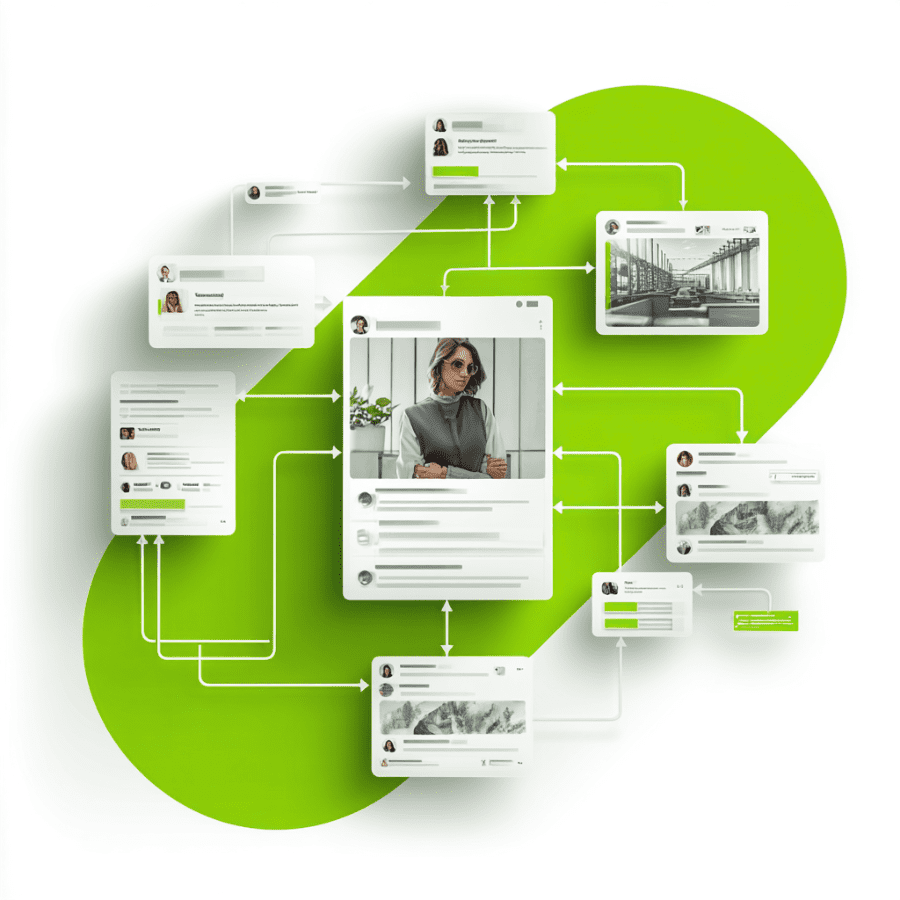
A landing page doesn’t operate in isolation. Conversion depends on alignment between four elements:
1. Promise
What your ad, email, or content originally offered.
2. Page
What your landing page reinforces and expands on.
3. Offer
The next logical micro-commitment.
4. Sequence
What happens after they take action.
When these are aligned:
- There’s no friction.
- There’s no confusion.
- There’s no cognitive dissonance.
The prospect flows naturally through the journey.

When they’re misaligned, conversion drops—even if your design looks beautiful.
Why Most Landing Pages Fail
Most businesses:
- Send traffic to a homepage.
- Use generic service pages.
- Write copy for “everyone.”
- Ask for large commitments too early.
This is the equivalent of a salesperson giving the same pitch to every person in the room.
Winning companies build multiple landing pages:
- One for cold traffic.
- One for warm prospects.
- One for comparison shoppers.
- One for high-intent decision makers.
Each page speaks to a specific mindset.
Specificity scales conversion.
Koka’s Insight: Clarity Over Cleverness
A high-converting landing page is not about clever design.
It’s about:
- Clear positioning.
- Clear audience definition.
- Clear problem articulation.
- Clear next step.
When prospects understand:
- Who you serve,
- What you solve,
- And what happens next,
Conversion stops being a struggle.
It becomes the obvious choice.
If you’re reviewing your landing page today, ask yourself:
Does this sound like a polished brochure…
Or does it sound like the best salesperson on your team?
The difference is revenue.

Featured Videos from Learning Paths
One quick watch from each curated path.