





TL;DR: Most B2B teams are waiting for intent data to tell them who’s ready to buy. By the time a prospect shows up in your intent platform, they’re already talking to three competitors. The alternative is signal-first marketing: tracking the behaviors that predict intent before the intent data fires. Here’s how it works and why I built SignalScout to do exactly this.
There’s a moment in every B2B sales cycle that nobody talks about. It’s the moment before the intent signal fires. Before the prospect downloads your white paper. Before they visit your pricing page. Before they show up in 6sense or Bombora as “in-market.”
In that moment, the prospect is doing things that are far more revealing than a content download. They’re engaging with specific people on LinkedIn. They’re posting about problems your product solves. They’re hiring for roles that signal a strategic shift. They’re following your competitors. None of this is “intent data” in the traditional sense. All of it is signal.
I built SignalScout because I got tired of the gap between when a buyer starts signaling and when traditional intent platforms notice. That gap is usually 30 to 90 days. In B2B, that’s the entire buying window.
30–90 days
Average gap between first buyer signal and traditional intent platform detection
3×
More likely to close when you reach out based on a signal vs. a cold touchpoint
50+
Distinct signal types SignalScout tracks across LinkedIn engagement, hiring, and content
Intent Data Is a Lagging Indicator
Here’s the problem with traditional intent data. It tells you someone is researching a purchase. That’s useful. But by the time someone is actively researching, they’ve already formed opinions. They’ve already identified vendors. They’ve probably already talked to one or two of your competitors.
Intent data tells you who’s in-market. It doesn’t tell you who’s about to be in-market. It doesn’t tell you who’s frustrated with their current solution. It doesn’t tell you who just got budget approval for a new initiative. Those things happen weeks or months before the first Google search.

This is the window most B2B teams completely miss. They wait for the intent signal, then they scramble to get into the deal. But the teams that win aren’t the ones who respond fastest to intent data. They’re the ones who show up before the intent data fires.
“Intent data tells you who’s in-market. It doesn’t tell you who’s about to be in-market. That gap is where deals are won or lost.”
“Koka Sexton”
The Three Signals That Predict Intent
After tracking this across thousands of B2B interactions, I’ve found that three signal categories consistently predict intent 30-90 days before traditional platforms detect it.
1. Engagement pattern shifts. When someone who’s been passively liking your content suddenly starts commenting with specific questions, something changed. Maybe they got a new role. Maybe their company just approved a budget. Maybe their current vendor just disappointed them. The content engagement is the surface signal. The behavioral shift is the real signal.
2. Hiring signals. When a company posts a VP of Demand Gen role, they’re about to invest in demand generation. When they hire a Head of Content, they’re about to scale content. When they post for a RevOps manager, they’re building infrastructure. Job postings are strategic announcements disguised as HR activity.
3. Competitive engagement. When your prospect engages with your competitor’s content, follows their company page, or comments on their posts, that’s not a threat. That’s a signal. They’re in research mode. They’re evaluating options. And if you can identify that moment, you can enter the conversation before they’ve formed their shortlist.
The Signal-First Workflow
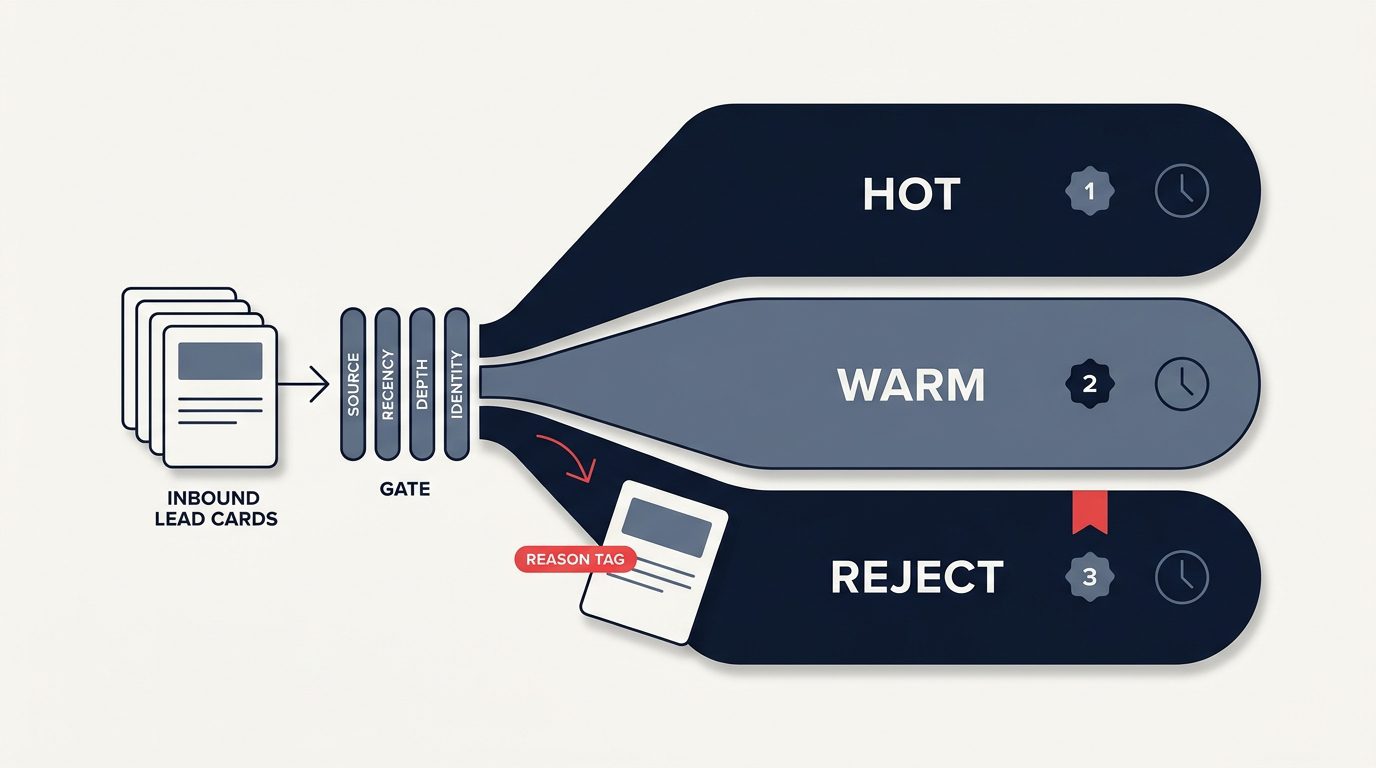
Monitor Engagement Patterns → Detect Behavioral Shifts → Validate With Hiring/Competitive Data → Reach Out Before Intent Fires
How to Start Reading Signals
You don’t need a platform to start. You need a process.
Pick five accounts you want to win. Not fifty. Five. Follow their key people on LinkedIn. Watch what they post. Watch what they engage with. Watch who they hire. Do this for two weeks and patterns will emerge that no intent platform will show you.
Build a signal log. When someone at a target account does something interesting, write it down. Date it. Note the context. After a month, you’ll have a timeline of signals that tells a clearer story than any lead score.
Act on the pattern, not the event. One engagement isn’t a signal. A VP of Marketing who’s been commenting on your posts for two weeks, just posted about a vendor frustration, and whose company is hiring for a related role? That’s not three data points. That’s a buyer who’s ready to talk.
This is the core idea behind SignalScout: surface the signals that matter, filter out the noise, and help you reach out when it actually matters — not 30 days after it mattered.

Just spotted a VP of Marketing at a target account who’s been commenting on our posts for two weeks, just posted about vendor frustration, and whose company is hiring for a RevOps role. That’s not three data points. That’s a buyer ready to talk — 60 days before any intent platform would flag them. Signal-first > intent data.
The Shift That’s Coming
Intent data is a $200 million category and growing. But the real shift isn’t better intent data. It’s moving from intent detection to signal intelligence. From “who’s in-market now” to “who’s about to be in-market.” From reactive outreach to proactive positioning.
The teams that make this shift won’t just close more deals. They’ll close bigger deals, faster, because they’ll be in the conversation before the buyer even knows they’re in a buying cycle. That’s not an intent problem. That’s a signal problem. And the teams that solve it first win.