





TL;DR
- AI creates ICP clarity by processing behavioral signals at scale — engagement patterns, buying committee dynamics, and competitive positioning data that manual analysis misses entirely
- Three methods: behavioral signal analysis across your best customers, pattern recognition in conversion data, and competitive ICP gap analysis
- The common mistake: feeding AI generic firmographics and expecting magic. Signal-rich inputs produce clarity. Garbage data produces garbage personas
- Real outcome: a B2B SaaS eliminated 60% of its wasted pipeline after AI surfaced that their actual ICP wasn’t who they’d been targeting for two years
- AI is a lens, not a crystal ball. You still need to know what signals to look for
70%
of ICP profiles are firmographic-only, zero behavioral signal
3×
higher conversion when ICP includes engagement data
60%
pipeline waste eliminated by signal-based targeting
Most B2B companies have an ICP document. It lists company size, industry, revenue, and a few job titles. Marketing runs campaigns against it. Sales qualifies leads against it. Finance budgets against it.
And most of them are wrong.

Not directionally wrong. Specifically wrong in ways that cost real pipeline. The persona you think converts at 12% actually converts at 4%. The segment you deprioritized is closing at 2× your average. The signal you’re ignoring is the one your best customers send before they buy.
This is the ICP clarity problem. And AI solves it differently than most people assume — the same way Edelman’s trust research shows that data-driven decisions outperform intuition-based targeting.— the same way Edelman’s trust research shows that data-driven decisions outperform intuition-based targeting.
The Answer: AI Doesn’t Build Your ICP. It Finds the Signal Your Gut Missed.
Here’s the short version, before we unpack it:
AI creates ICP clarity by processing behavioral signals at scale — what your best customers actually did before they bought, not what they told you in a survey. It finds patterns across hundreds of data points that no spreadsheet analysis would surface. And it does it continuously, so your ICP evolves as your market does instead of sitting frozen in a 2023 deck.
Three methods. Each builds on the last.
Method 1: Behavioral Signal Analysis — What Your Best Customers Actually Did
Traditional ICP work starts with your best customers and asks: “What do they have in common?”
The analyst pulls industry, headcount, revenue, tech stack. Patterns emerge. You write them down. That’s your ICP.
The problem: firmographics describe who bought. They don’t describe why.
Two companies with identical firmographics can have completely different buying behavior. One purchased because their CMO came from a data-driven organization. The other signed after their competitor launched a feature they couldn’t match. Same industry, same size, same title — completely different signals.
AI changes this by processing behavioral signals:
- Content engagement patterns — what they consumed before engaging sales
- Timing signals — how long between first touch and buying intent
- Buying committee dynamics — who else got involved and when
- Trigger events — funding rounds, leadership changes, competitive moves
- Objection patterns — what they pushed back on and how it was resolved
Feed your CRM data, website analytics, email engagement logs, and sales call transcripts into an AI system and it surfaces correlations you’d never find manually — similar to how the LinkedIn B2B Institute uses behavioral data to model B2B buying patterns.— similar to how the LinkedIn B2B Institute uses behavioral data to model B2B buying patterns. This is the difference between reading digital body language and just reading a CRM record. A real example:
A B2B SaaS company thought their ICP was “VP of Marketing at companies with 200+ employees.” After running behavioral signal analysis on their 40 best customers, the AI surfaced something different. Their highest-converting segment was actually Director of Demand Generation at companies with 50-200 employees who had 3+ tools in their martech stack and had hired a second marketer within the last 6 months.
The firmographics were similar. The behavioral signals were completely different. The company names, titles, and company sizes looked right — but the buying intent signals told the real story. That second hire was the trigger. The martech stack density was the readiness indicator. The title level was a symptom, not the cause.
They shifted targeting. Pipeline waste dropped by 60% in one quarter.
Method 2: Pattern Recognition Across Conversion Data — Finding the Hidden Commonalities
Method 1 looks at your winners. Method 2 looks at everything — wins, losses, stalled deals, churned accounts — and finds patterns you didn’t know to look for.
This is where AI outperforms analyst-led ICP work most decisively. A human analyst brings assumptions. They look at industry and size because that’s the framework they know. AI doesn’t care about the framework. It finds correlation wherever it exists.
Here’s what this looks like in practice:
| Traditional ICP Signal | What AI Actually Found |
|---|---|
| Company size: 200-500 employees | Companies that grew headcount 20%+ in 12 months, regardless of current size |
| Industry: SaaS / Technology | Companies with a dedicated RevOps hire made within last 18 months |
| Role: VP / Director of Marketing | Buyer who engaged with 2+ case studies AND 1 pricing page visit within 7 days |
| Revenue: $10M-$50M | Companies running active job postings for demand generation roles |
The AI didn’t replace firmographics. It layered signal on top of them and surfaced the attributes that actually drove conversion.
One more example: When we ran this analysis on SignalScout’s own early customer data, the initial ICP was “Founder-led B2B companies doing outbound.” Fine. Directionally accurate. But the signal analysis surfaced that the highest-converting segment had something more specific: they had already tried building a signal-scoring system internally and failed. They didn’t need to be sold on the concept. They needed execution.
That insight changed everything — messaging, positioning, sales qualification. It came from looking at conversion patterns, not customer surveys. This is the same principle I apply when building revenue architecture — the data tells a different story than the org chart does.
Method 3: Competitive ICP Gap Analysis — Finding the Underserved Segment
Method 1 tells you who your best customers actually are. Method 2 finds the hidden conversion signals. Method 3 answers a different question: who is being ignored by the market?
AI can map public content from competitors — their website positioning, case studies, job postings, and GTM messaging — and identify the segments they’re clearly targeting versus the ones they’re neglecting.
This produces a gap map:
- Overcrowded segments: Every competitor claims this ICP. Price compression. Noise.
- Underserved segments: The ICP exists, the need is real, but no one has built positioning or product for them specifically.
- Adjacent segments: Companies one step removed from your obvious ICP that share the same core problem but don’t fit the standard category definition.
Here’s a concrete example from the B2B marketing tools space:
Most marketing automation and ABM platforms target “B2B SaaS companies with dedicated marketing teams.” That’s the overcrowded segment. AI analysis of competitor case studies, website copy, and job postings showed almost no one positioning for professional services firms with 20-100 employees who are building their first marketing function.
Same tools. Same workflow. Similar budget. But a completely different positioning — and a completely open competitive lane.
The AI didn’t invent this segment. It surfaced that it existed, was underserved, and matched the buying signals of companies that actually purchase. A human analyst would need weeks to map this across 10+ competitors. AI does it in hours.
Putting It Together: The AI-ICP Workflow
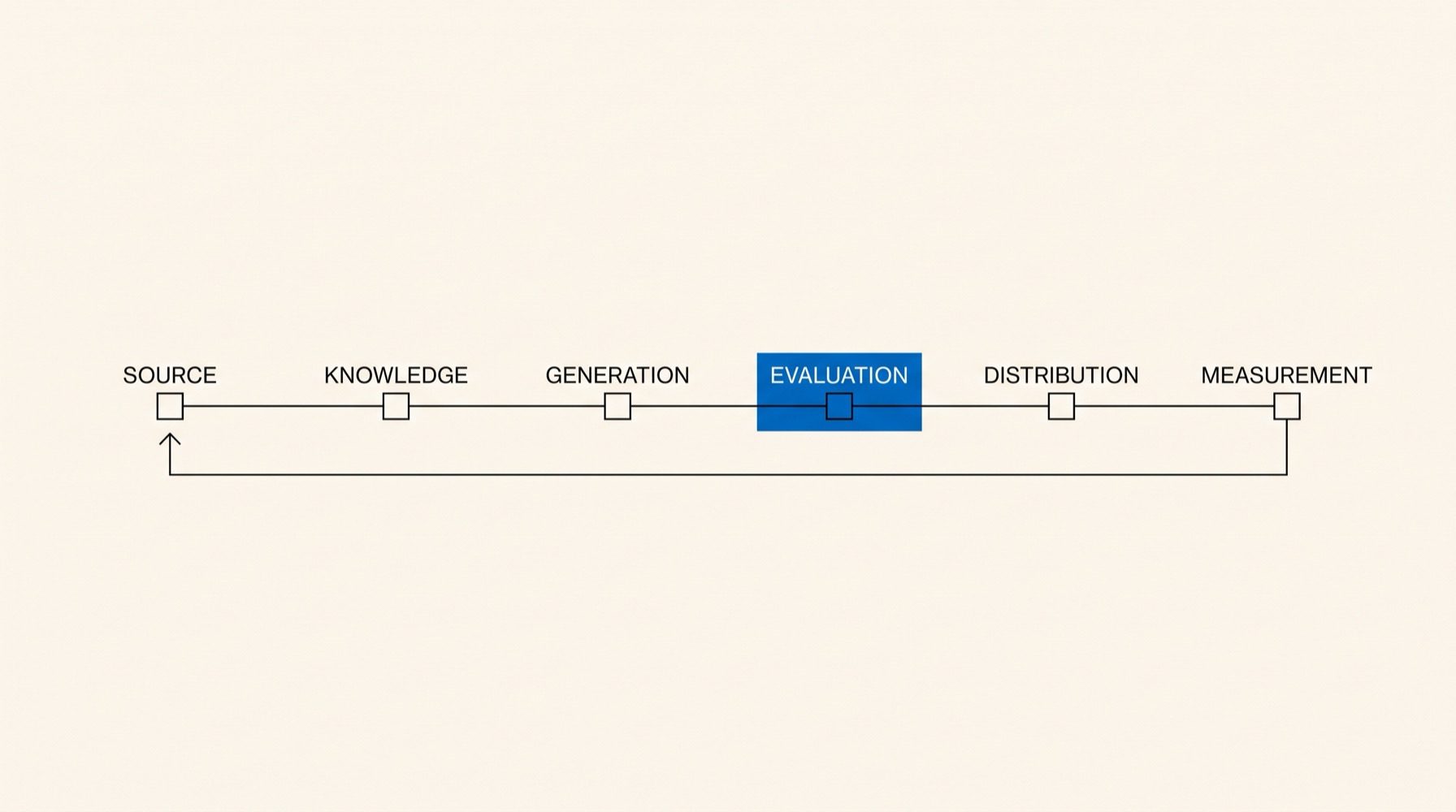
These three methods aren’t separate exercises. They’re a sequence:
Start with behavioral signals from your own data. Layer in pattern recognition across conversions. Then validate against competitive positioning to find your sharpest edge.
Each pass tightens the ICP. What started as “VP Marketing at 200+ employee SaaS companies” becomes something far more specific and actionable.
The ICP Clarity Do’s and Don’ts
| Do | Don’t |
|---|---|
| ✅ Feed AI your full CRM data — wins, losses, churn, stalled deals | ❌ Feed it only your closed-won data and ask for your ICP |
| ✅ Include behavioral signals: content engagement, email interactions, buying committee changes | ❌ Stop at firmographics and job titles |
| ✅ Re-run the analysis quarterly — ICPs evolve as your product and market evolve | ❌ Treat your ICP as a one-and-done document |
| ✅ Validate AI findings against actual pipeline outcomes before shifting budget | ❌ Trust the AI output without testing it against real deals |
| ✅ Use AI to continuously monitor for ICP drift and new signal patterns | ❌ Set it, forget it, and wonder why conversion dropped 18 months later |
What This Looks Like in Your Stack
You don’t need a custom ML pipeline to start. Most teams already have the data and the tools:
- CRM data — deal stages, close reasons, sales activity, contact engagement history
- Website analytics — page views, session behavior, content consumption paths
- Email engagement — opens, clicks, replies, meeting books
- Product usage data — feature adoption, time-to-value, expansion patterns
- Support and CS data — ticket categories, NPS scores, churn reasons
Feed this into any AI system capable of pattern analysis — modern LLMs handle this well with the right prompting — and ask it to find the behavioral signals that correlate with your best outcomes. Not just “who bought” but “what did they do before they bought.”
The output is not a replacement for strategic thinking. It’s a sharper input into it.
The Hard Truth About AI and ICP
AI won’t give you ICP clarity if your input data is shallow. Content Marketing Institute research shows the gap between data-rich and data-poor marketing organizations is widening every quarter. Content Marketing Institute research shows the gap between data-rich and data-poor marketing organizations is widening every quarter.
If your CRM only tracks name, title, company, and deal stage, AI can’t find behavioral patterns because there are none in the data. If you’ve never logged why a deal was lost, AI can’t surface loss patterns. If your marketing attribution is “they came from a webinar,” AI can’t connect content consumption to buying intent.
The AI magnifies what you feed it. Rich signal in → sharp ICP out. Thin data in → AI-generated noise dressed up as insight.
“AI is a lens, not a crystal ball. It sharpens the signal you already have. It can’t create signal from noise.”
This is why the companies getting the biggest ICP breakthroughs from AI are the ones that already track behavioral data. They just couldn’t process it fast enough. AI removes that bottleneck.
What’s your current ICP process — firmographic only, or are you already layering in behavioral signals?
Drop a comment. I read every one. And if you want the detailed framework with the exact prompts and data schema, reach out here.