




I’ve been selling on LinkedIn since 2014. I’ve seen the platform evolve from a digital resume repository to the single most powerful B2B sales channel in existence. And in 2026, I’m watching it shift again.
The tactics that worked even two years ago are losing effectiveness. AI-generated content saturation means buyers are more skeptical. LinkedIn’s algorithm increasingly prioritizes genuine engagement over promotional content. And the signal-to-noise ratio has degraded across the entire platform.
But LinkedIn for sales is far from dead. It’s just matured. The spray-and-pray era is over, and the signal-based era is here.
Here are seven ways to use LinkedIn for sales that still work in 2026, organized by impact:
1. Signal-Based Prospecting (Replace Cold Outreach)
The single biggest change in LinkedIn for sales between 2024 and 2026 is the death of cold outreach as a primary strategy. Not because it doesn’t work at all — but because signal-based prospecting works 3.2x better.
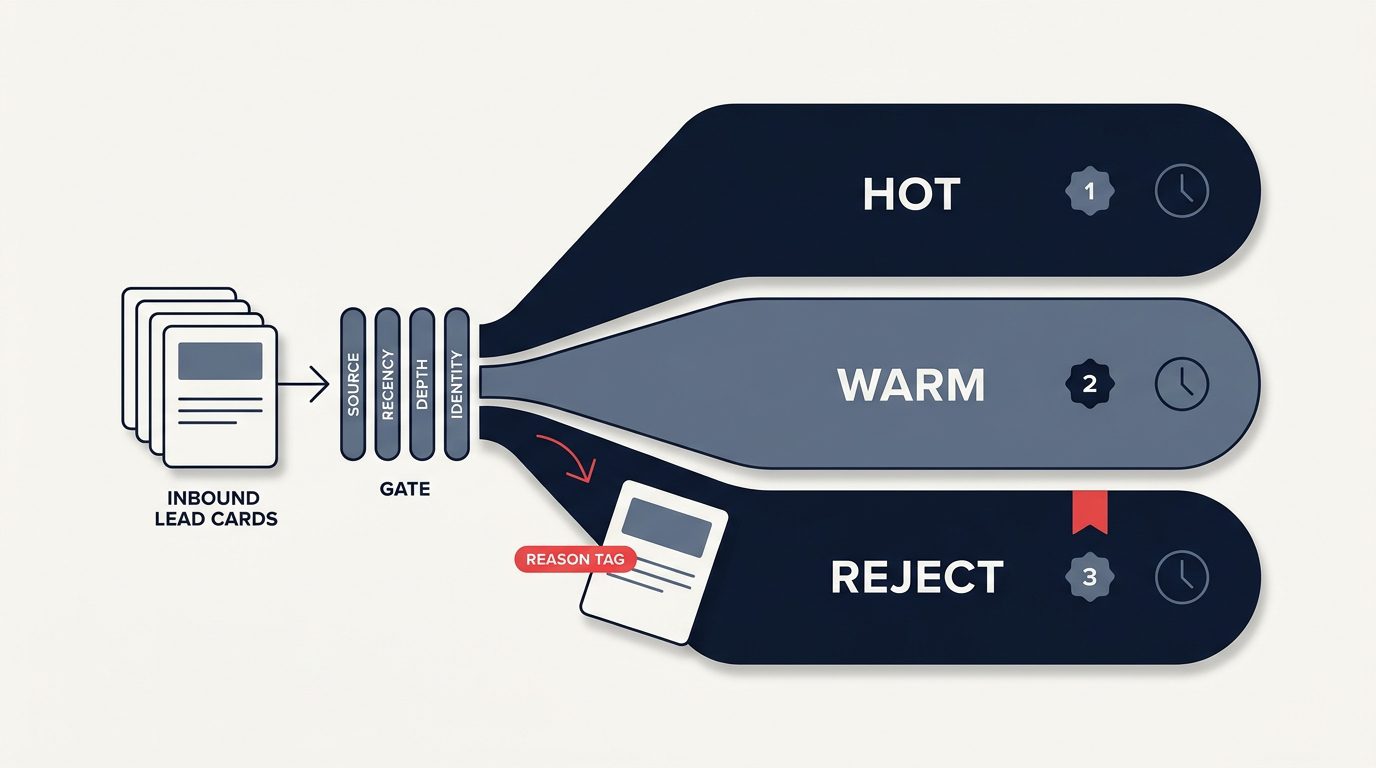
Signal-based prospecting means you only reach out to people who have already demonstrated buying intent through their behavior on LinkedIn. The Social Selling OS tracks five core signals:
- Profile View: They visited your profile — they’re evaluating you
- Repeat Engager: They’ve engaged with 3+ posts in 30 days — they’re paying attention
- Inbound Connection: They sent you a connection request — they’re reaching out
- Substantive Comment: They wrote a detailed comment — they’re engaging with your thinking
- Post Save: They saved your content — they’re coming back to it
When you reach out to someone who has emitted one of these signals, your reply rate jumps from 1-3% (cold) to 40-45% (signal-based). The difference is that you’re not interrupting — you’re responding to existing interest.
The Numbers Don’t Lie
Cold InMail: 1-3% reply rate
Warm InMail (connection-based): 8-12% reply rate
Signal-based outreach: 40-45% reply rate
The 3.2x multiplier on signal-based outreach is the single most compelling reason to shift your LinkedIn strategy in 2026.

2. Build an Authority Profile (Not a Resume)
Your LinkedIn profile in 2026 is your most valuable digital asset — if it’s built for buyers, not recruiters. Most profiles still optimize for job searches: keyword-stuffed headlines, generic summaries, and bullet-point experience lists.
A buyer-optimized profile does three things:
- States the problem you solve in the headline, not your job title
- Demonstrates methodology in the about section, not just credentials
- Provides proof through featured posts, recommendations, and case results
Your profile is the landing page for every signal you generate. When someone visits after seeing your post, your profile has about 10 seconds to convince them you’re credible. Make those seconds count. I break down the full rebuild — headline, about section, featured content — in my LinkedIn profile guide for social selling.
3. The 80/20 Content Cadence
The most effective LinkedIn content strategy in 2026 follows an 80/20 split: 80% value with no ask, 20% promotional with a clear CTA. This ratio has held steady across every analysis I’ve done — it’s not a theory, it’s a data point.
The 80% value content is organized into four pillars:
- Industry Lens (30%): Trends, market analysis, big-picture thinking
- Practitioner’s Playbook (40%): How-to content, frameworks, tactical advice — this is the highest-converting pillar
- Lessons From the Trenches (20%): Real stories, failures, honest reflections
- People and Culture (10%): Team, values, behind-the-scenes
The 20% promotional content should include a specific, measurable CTA — not “check out my website” but “DM me for the template” or “book a 15-minute audit.” The promotional content works because the 80% value content has established trust.
4. The 3-Touchpoint Rule
Before you send a direct message to anyone on LinkedIn, they should have received at least three touchpoints from you that provided value. These touchpoints can be:
- A thoughtful comment on one of their posts
- Sharing their content with your audience
- Mentioning them in a relevant post
- Sending a resource (article, tool, template) without any ask
The 3-touchpoint rule isn’t about manipulation — it’s about building recognition and trust before you ask for time. When someone has seen your name 3+ times in valuable contexts, your DM is welcomed instead of ignored. I’ve published a complete breakdown of the 3-Touchpoint Rule if you want the full system.

The 3-touchpoint rule is the hardest thing to follow — and the most important.
Your instinct when you find a prospect is to DM them immediately. That’s cold outreach disguised as warmth.
The rule: 3 genuine value-providing interactions before any direct ask. Comment on their posts. Share their content. Send a relevant resource.
Then, and only then, send a DM. Your reply rate goes from 1-3% to 40-45%. The math is clear.
5. Use LinkedIn as a Research Engine
LinkedIn’s most underused feature in 2026 is its search and monitoring capabilities. Before you create content or reach out to anyone, you should be using LinkedIn to understand what your buyers are talking about.
Search for your ICP’s job titles + key topics. Look at what content they’re engaging with. Read their comments to understand their pain points. Monitor which posts are getting traction in your target accounts.
This research layer is what separates signal-based sellers from everyone else. When you understand what your buyers are thinking about — right now, not six months ago — your content and outreach become dramatically more relevant.
6. Automate the Right Things (Without Getting Banned)
LinkedIn in 2026 has aggressive anti-automation measures, and its user agreement explicitly prohibits unauthorized automation. The days of mass connection requests, auto-comment tools, and sequence-based DMs are over — and getting banned is a real risk. I mapped the safe boundaries in how to automate LinkedIn social selling without getting banned.
But smart automation is still valuable. The key is automating research and monitoring, not outreach. Tools like SignalScout can track profile visitors, post engagement patterns, and content performance — giving you a list of high-signal prospects without automating a single interaction.
The rule: automate the detection of signals, but keep the human touch in every response. When AI automates the outreach itself, it loses the personal context that makes signal-based selling work.
7. Consistency Over Virality
The biggest mistake sellers make on LinkedIn is chasing viral posts. A single post with 10,000 views generates fewer signals than 20 posts with 200 views each — because signals come from repeated, targeted engagement, not reach.
The Social Selling OS recommends a cadence of 3-5 posts per week, sustained for 90 days before expecting consistent inbound pipeline. The first 30 days are building the flywheel. Days 30-60 are when signals start appearing. Days 60-90 are when pipeline starts to form.
Consistency compounds on LinkedIn in ways that virality doesn’t. Each post builds on the last, creating a body of work that establishes authority and signals expertise. When a prospect sees your 15th post — even if they’ve never engaged before — they now have 15 data points about who you are and what you know.
The 90-Day LinkedIn Reset
If your LinkedIn strategy isn’t producing pipeline, here’s the reset:
Week 1-2: Audit your profile for buyer signals. Optimize headline, about section, and featured content.
Week 3-4: Start posting 3x/week using the four-pillar content framework. Engage with 5 prospects daily using the 3-touchpoint rule.
Month 2: Ramp to 5 posts/week. Begin signal-based outreach to repeat engagers.
Month 3: Full cadence. You should see 8-12 inbound conversations starting per week.
90 days to a functioning signal-based LinkedIn pipeline. The framework works if you work it.
What I Learned Helping Build This Category at LinkedIn
Here’s a perspective most “LinkedIn tips” articles can’t offer: I was inside LinkedIn when social selling became a category. In 2014 I was making the case — internally and publicly — that salespeople belonged on the platform, back when most sales leaders thought LinkedIn was for recruiters and job seekers. That work helped shape how the industry measured the practice, including the thinking behind the Social Selling Index.
Twelve years of watching this space taught me one durable lesson: platform tactics rot, buyer psychology doesn’t. Every tactic on this list is the same principle wearing different clothes — show up where your buyer is paying attention, prove you understand their problem, and make it easy for them to start a conversation. That principle worked in 2014. It works in 2026. It will work in 2030, whatever the feed looks like by then.
The mistake I watched companies make in 2015 is the one I watch them make now: they treat the tactic as the strategy. Back then it was “get everyone to connect and post.” Today it’s “get everyone an AI assistant and 5x the output.” Both fail for the same reason. Volume without signal awareness is noise with better tooling. Salesforce’s State of Sales research shows reps already spend most of their week on activities that aren’t selling. The answer is not more activity. It’s better targeting of the activity you already do.
If I had to compress a decade into one sentence: the sellers who win on LinkedIn treat it as a place to detect demand, not a place to broadcast supply.
The Bottom Line on LinkedIn for Sales in 2026
LinkedIn for sales isn’t dead — but the old playbook is. Cold outreach, mass connection requests, and broadcast content are losing effectiveness every quarter. The sellers who are winning in 2026 have shifted to a signal-based approach: build authority, generate signals through valuable content, and reach out only when the prospect has already shown interest.
The barrier to entry for LinkedIn selling has gone up. That’s good news if you’re willing to invest in the right approach — because most sellers won’t. The ones who do see 3.2x higher reply rates, 40-45% conversion on outreach, and a steady stream of inbound pipeline.
If your team needs help making this shift — from activity-based to signal-based — that’s the work I do with B2B revenue teams. Get in touch and tell me where your pipeline is stuck.
This is part of the Social Selling series. Read the full framework in the Social Selling OS collection.