



LinkedIn Is Winning the Automation War
In 2026, LinkedIn's anti-bot systems are better than ever. They detect patterns that used to fly under the radar: consistent 1-second intervals between actions, scroll speed that never varies, mouse movements that follow straight lines. Even well-intentioned automation tools that mimic human behavior are getting flagged.
The result is a growing graveyard of ghosted accounts — connections lost, messages stranded, audiences gone. And the worst part? Most of those users thought they were being careful.
This article is the operating manual for staying on the right side of that line.
The Golden Rule of LinkedIn Automation
There is one rule that determines whether any automation tool keeps your account safe or gets you banned:
If automation replaces a human interaction, it is risky. If it supports a human interaction, it is safe.
This is not a guideline. It is a hard line that LinkedIn draws algorithmically. Break it, and your account is gone. Respect it, and you can scale your social selling operation indefinitely.
Let's apply this rule to every common LinkedIn automation use case.
What You Can Safely Automate
Signal Detection
This is the single highest-ROI automation you can run on LinkedIn. Signal detection tools track who visits your profile, who engages with your content, and who follows your company page — then surface those people as leads.
Why this is safe: The automation is purely passive. It observes behavior that LinkedIn already permits you to see. It does not generate any activity on your behalf. You are like a security camera — always watching, never touching.
Data Enrichment to CRM
Once you detect a signal, the next step is to learn everything you can about that person. Tools like various enrichment APIs can pull publicly available data — role, company, industry, recent posts — and pipe it into your CRM alongside the signal context.

This approach mirrors the evolution of the social selling stack from schedulers to signal detection systems. Why it’s safe: You are collecting data after the fact, not during the interaction. You are not reaching out to anyone. You are not triggering any LinkedIn event. You are building an intelligence layer that makes your actual outreach smarter.
Content Scheduling
Posting content at consistent intervals is table stakes for social selling. Native scheduling tools like Buffer, Hootsuite, and (controversially) LinkedIn's own scheduler are safe because the posts are published through LinkedIn's approved API channels.
Why this is safe: You are using LinkedIn's own infrastructure to schedule. The key distinction is that scheduling posts is a broadcast action, not an interaction. No one is receiving a personalized message from an automated system. They are seeing content you wrote, published at a time you chose.

I run automation on LinkedIn every day. But I have never automated a connection request, a comment, or a DM.
The automation runs before the interaction — detection, research, CRM enrichment. The interaction itself is always me.
That distinction is why I still have an account, and why every signal-based outreach I send gets a response rate that cold outreach can not touch.
What Will Get You Banned
These are the activities that LinkedIn's algorithms actively hunt. Do them, and your account is on borrowed time.
| Activity | Why It Gets Flagged | Ban Timeline |
|---|---|---|
| Auto-connection requests | Consistent timing between requests is a dead giveaway | 2-4 weeks |
| Auto-comments on posts | Repetitive language patterns and post-interaction timing | 1-3 weeks |
| Auto-DMs to new connections | Same message sent at consistent intervals post-connection | Immediate on repeat |
| Profile scraping at scale | Too many profile views with no human scroll pattern | 1-2 weeks |
| Auto-endorsements | LinkedIn specifically monitors skill endorsement patterns | Warning then ban |
Every one of these activities replaces a human interaction with an automated one. LinkedIn's algorithms do not distinguish between "good" automation and "bad" automation. They detect the pattern, and they act.
The Signal-Based Selling Framework
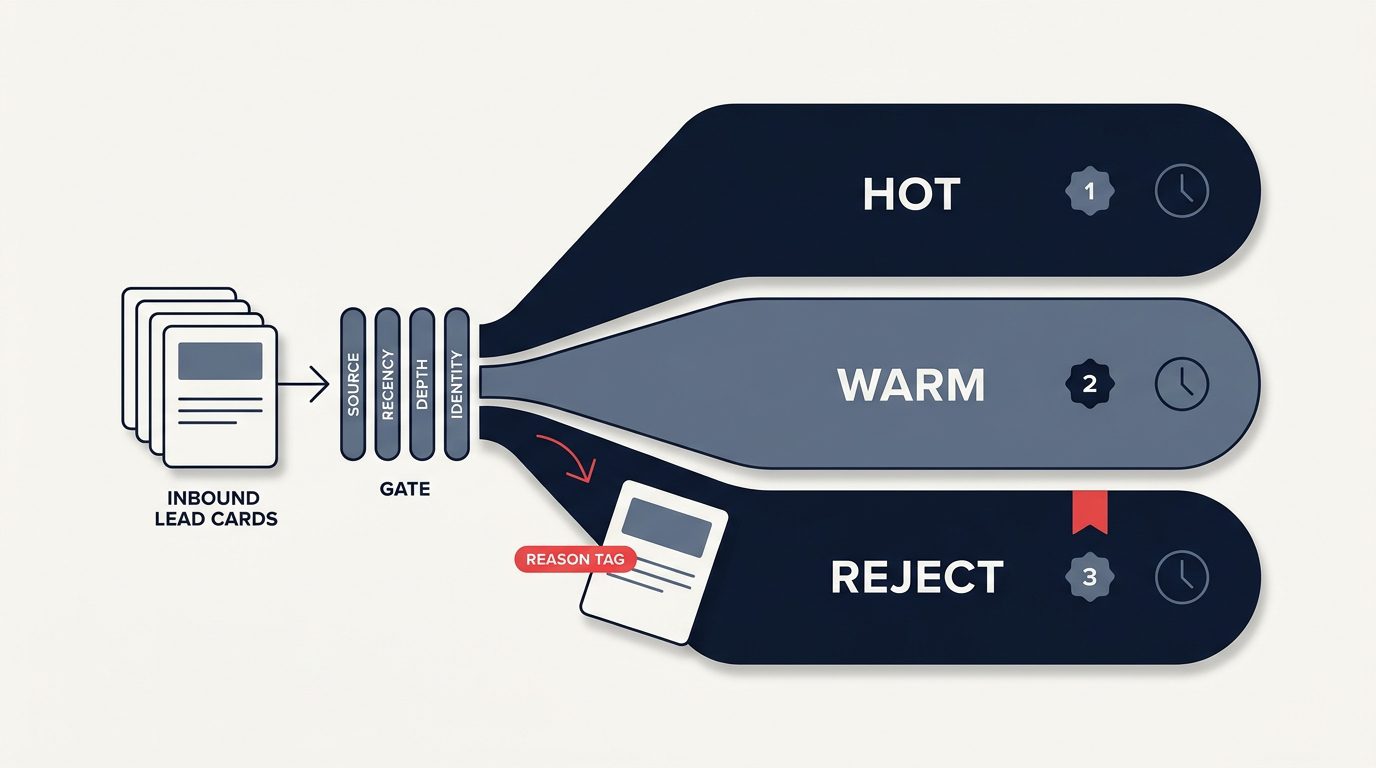
Once you have the right automation in place, the workflow looks like this:
Building Your Automation Stack
A safe LinkedIn automation stack has three layers, and each layer has a specific job.
Layer 1: Signal Detection
A signal detection platform collects profile visitor and company follower data on a schedule, exporting structured CSV files. This is your raw signal feed.
Layer 2: CRM Integration
An automation workflow platform picks up those CSV exports, enriches each contact with public LinkedIn data through aggregated APIs, and syncs the results to your CRM. This is your intelligence layer.
Layer 3: Daily Review
Every morning, you review the new signals in your CRM. You look at the highest-scored contacts and write a personalized outreach message. This is the only step that requires a human — and it is the step that generates the responses.
The 15-Minute Daily Signal Review
Most people spend 2-3 hours per week on LinkedIn with no system. Signal-based selling requires 15 minutes per day: open your CRM, scan the new signals, send 3-5 personalized messages. That is it. The automation handles everything else.
Why Signal-Based Outreach Beats Cold Outreach
The numbers tell the story. Cold outreach on LinkedIn — connecting with someone you have never interacted with and sending a pitch — has a response rate of 1-3%. Warm outreach to someone who has engaged with your content or visited your profile gets 40-45% response rates.
That is not a small improvement. That is a 15x difference. In a world where every B2B seller is fighting for attention, signal-based outreach is not a luxury — it is the only game in town that still works at scale.
The catch is that you need detection at scale to generate enough signals. And detection at scale requires automation. That is the loop: automate detection so you can personalize outreach.
Common Objections
"But other people are automating everything and they are fine"
No, they are not fine. They just have not been caught yet. LinkedIn bans in waves, and the waves hit everyone eventually. The accounts you see running automated outreach today will be gone within 60 days.
"I need scale. I cannot send messages manually"
You do not need more messages. You need better targeting. When 40% of your signal-based outreach gets a response, you send fewer messages, not more. The math works in your favor.
"Scheduling is automation too — isnt that risky?"
Content scheduling through LinkedIn's native scheduler or approved API tools (Buffer, Hootsuite) is safe because the posts are published through LinkedIn's infrastructure. The risk comes from third-party tools that log into your account and mimic human behavior in the browser.
The Bottom Line
LinkedIn automation is not going away. What is going away is unsophisticated automation that replaces human interaction. The tools that survive — and the accounts that survive — will be the ones that use automation to feed better human conversations, not replace them.
The golden rule has not changed: automate detection, enrichment, and scheduling. Keep every interaction human. That is how you scale without getting banned.
If you are currently running automated outreach on LinkedIn, stop. Clean up your tool stack. Reset your automation to detection-only for 30 days. Your account will thank you, and your response rates will go up.
If you want to build this the right way, the Social Selling OS framework covers the full signal-based selling workflow. Start with signal detection — everything else follows.
Want to see signal-based prospecting in action without risking your LinkedIn account? Try SignalScout — it captures engagement signals from publicly available data. For B2B consulting on building a safe automation architecture, reach out here.