





I started selling on LinkedIn in 2014. Back then, social selling meant one thing: connect with as many people as possible, post whatever came to mind, and hope some of it stuck. The phrase “social selling” itself was controversial — half the sales org thought it was a fad, and the other half didn’t know what it meant.
Twelve years later, social selling has transformed from a niche activity into a core GTM strategy. But the path from 2014 to 2026 wasn’t linear. It was a series of shifts — in technology, in buyer behavior, and in our understanding of how relationships actually drive revenue.
2014-2016: The Wild West
In 2014, LinkedIn was still primarily a recruiting and job-search platform. Salespeople were just beginning to realize its potential for prospecting. The dominant strategy was volume-based:
- Send as many connection requests as possible (the limit was 3,000 connections)
- Use LinkedIn’s “Who’s Viewed Your Profile” as a crude intent signal
- Post generic industry content with no real strategy
- DM prospects the moment they accepted your connection request
It worked — for a while. The platform was less crowded, buyer expectations were lower, and being active on LinkedIn was itself a differentiator. But even then, the best social sellers were starting to notice something: volume alone wasn’t sustainable.
The industry saw it coming before sales culture did. As early as 2012, Harvard Business Review was writing about sellers using social platforms to reach B2B buyers. But most sales organizations didn’t move until the results became impossible to ignore. If you want the personal version of this era, I told the full story in why I started social selling.
What I Learned in 2014
In 2014, I was selling to enterprise marketing teams. LinkedIn was my primary prospecting tool. I learned quickly that connecting with someone and immediately pitching them produced the same result as cold calling: rejection. The sellers who built relationships first, sold more. The data was there even then — it just took a decade to formalize into frameworks.
I also had a seat most practitioners didn’t: I was at LinkedIn, helping build the case for social selling as a discipline. I spent those years evangelizing a simple idea — that the seller who shows up in a buyer’s feed with something useful beats the seller who shows up in their inbox with a pitch. It was a hard sell, internally and externally. Sales leaders wanted call volumes and email sequences, not “engagement.” What changed their minds wasn’t the argument. It was the pipeline the early adopters produced.
2017-2019: The Content Era
By 2017, LinkedIn had become a publishing platform. The introduction of LinkedIn Pulse and the rise of long-form posts changed the game. Suddenly, social selling wasn’t just about connections — it was about content.
This era gave birth to the LinkedIn influencer. Sellers who could consistently produce valuable content built massive followings and, more importantly, steady pipelines. The best practitioners discovered a pattern that still holds today: content generates signals, and signals generate conversations.

But the content era also had a dark side. As more people started posting, the signal-to-noise ratio degraded. Generic “5 tips for better sales” posts flooded feeds. Buyers became more selective about what they engaged with.
2020-2022: The Remote Selling Pivot
COVID-19 was the inflection point for social selling. When in-person meetings disappeared, LinkedIn became the primary channel for B2B relationships. Sales teams that had resisted social selling were forced to adopt it. The result was a massive influx of sellers and a corresponding increase in competition for buyer attention.
This period also saw the rise of Sales Navigator as an essential tool, the emergence of LinkedIn automation tools (and subsequent crackdowns), and the first serious data analysis of what actually worked on the platform.
By 2022, it was clear that social selling wasn’t a nice-to-have — it was how B2B deals got done. But the tactics were still fragmented. Every seller had their own playbook, and most were still guessing.
2023-2025: The Signal Intelligence Revolution
The period from 2023 to 2025 saw the most significant shift in B2B social selling since the platform’s founding. Two forces converged:
- Data maturity: Sellers finally had access to engagement analytics, signal detection tools, and performance data that could inform strategy
- AI integration: Machine learning made it possible to identify buying signals at scale and prioritize outreach based on intent
This period is when the concept of “signal-based GTM” crystallized. Instead of broadcasting content to everyone and hoping for responses, sellers could now identify the specific behaviors that indicated buying intent and focus their energy there.
The data from this period is staggering: 94 posts analyzed across 7 months showed that 53% of content received zero engagement. But the content that targeted specific buying signals generated 3.2x higher reply rates and 40-45% conversion on outreach.

I’ve been selling on LinkedIn since 2014. The evolution has been remarkable.
2014: Connect with everyone, pitch immediately, hope for the best.
2017: Build an audience through content, then sell to them.
2020: LinkedIn becomes the primary B2B channel overnight.
2023: Signal intelligence changes everything.
2026: Signal-based GTM is the standard.
The sellers still using the 2014 playbook are getting 1-3% reply rates. The ones using signal-based GTM are getting 40-45%.
The game didn’t just change. It evolved.
2026: Signal-Based GTM as the Standard
In 2026, social selling has fully matured into signal-based GTM. The framework I’ve developed through the Social Selling OS represents this evolution in structured form:
The 5-Step Framework
- Identify Your Lane: Define the specific buyer and problem you serve
- Build Your Authority Profile: Optimize for buyers, not recruiters
- Engage With Insights: Create content that generates signals
- Add Value First: Apply the 3-touchpoint rule before any ask
- Convert: Reach out only when signals indicate readiness
The 5 Core Signals
- Profile View — someone is evaluating you
- Repeat Engager — someone is paying attention
- Inbound Connection — someone is reaching out
- Substantive Comment — someone is engaging with your thinking
- Post Save — someone is coming back to your content
The Signal-Led Funnel
- Capture — generate signals through content and profile optimization
- Enrich — understand who the signalers are and what they need
- Score — prioritize based on signal strength and fit
- Route — send the right signalers to the right outreach
- Outreach — engage with context, not templates
What Stayed the Same
For all the evolution, some fundamentals haven’t moved an inch — the same ones I cover in Social Selling 101:
- Relationships matter most. Technology has changed how we build them, but the fundamental truth remains: people buy from people they trust.
- Value before ask. The 80/20 rule (80% value, 20% promotional) has held steady across every platform change and algorithm update.
- Consistency beats intensity. The sellers who show up regularly — posting 3-5 times per week, engaging daily — outperform those who go viral once and disappear.
What I Got Wrong Along the Way
Retrospectives always risk sounding like the author saw it all coming. I didn’t. Three things I got wrong over twelve years:
- I overestimated content and underestimated signals. For years I taught “post consistently and pipeline follows.” Consistency matters, but the posts were never the point — the signals they surfaced were. It took building SignalScout, and watching which behaviors actually preceded revenue, to see that clearly.
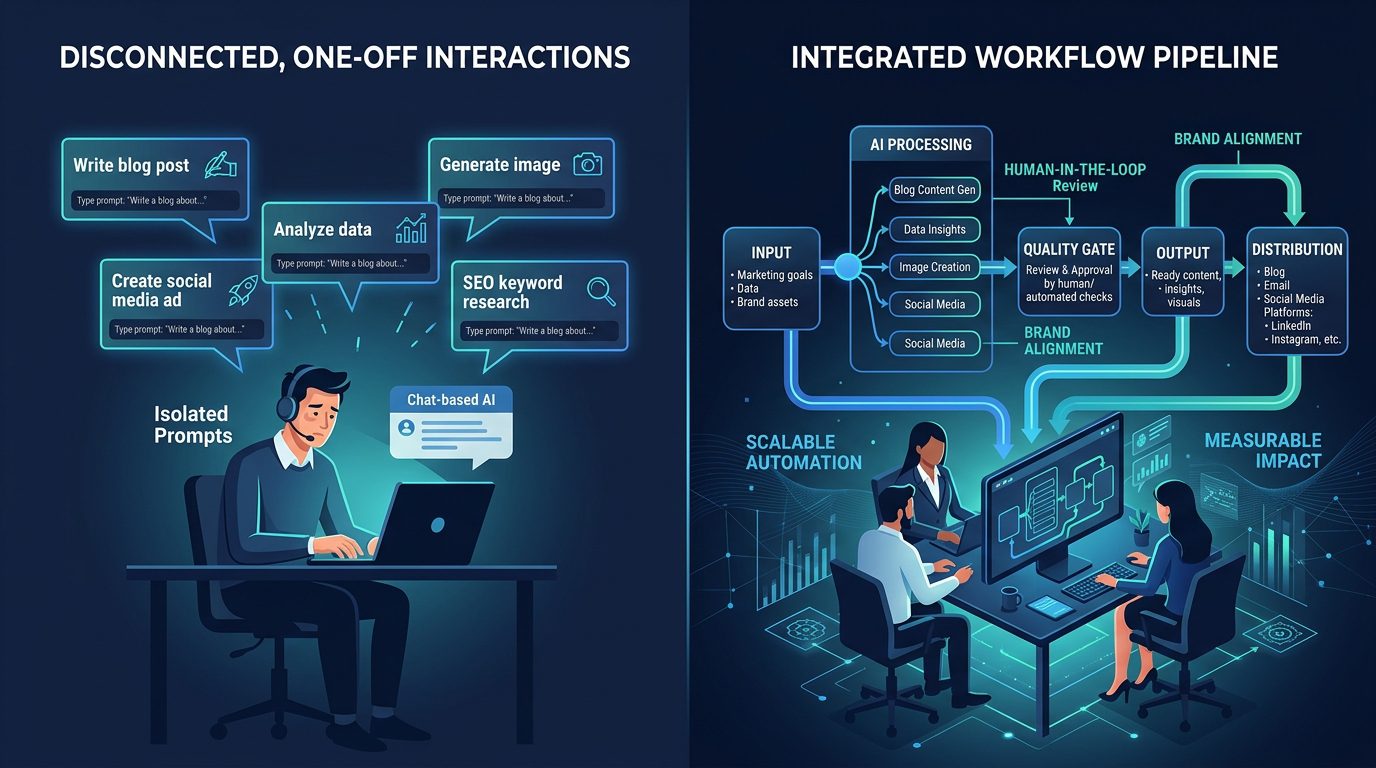
- I thought tools would solve adoption. They don’t. I watched companies buy every social selling platform on the market and change nothing. Culture and leadership modeling drive adoption; tools only amplify behavior that already exists.
- I expected the transition to happen faster. In 2016 I would have bet that signal-based selling would be standard practice by 2020. Enterprise sales culture moves slower than technology. The playbooks that feel obvious to practitioners take a decade to become default.
I share these because the errors are instructive. Every one of them came from overweighting the visible (content, tools, technology) and underweighting the invisible (signals, culture, time). If you’re building a social selling motion today, that’s the trap to avoid.
Where We’re Heading
Looking ahead, I see three trends shaping the next evolution of social selling:
- AI-native signal detection: Tools will increasingly identify buying signals across platforms, not just LinkedIn. The seller of 2028 will have a unified signal dashboard.
- Hyper-personalized content at scale: AI will help create content tailored to specific buyer segments and stages, making the 80/20 rule even more effective.
- Signal-based team selling: Organizations will build signal-based GTM processes that coordinate sales, marketing, and CS around prospect signals.
The direction of travel is already visible in the data. LinkedIn’s State of Sales research has tracked, year over year, the growing share of top performers who rely on intent data and buyer intelligence rather than raw prospecting volume. The trendline only points one way.
The evolution from 2014’s “connect and pitch” to 2026’s signal-based GTM represents more than a tactical shift — it’s a philosophical one. We stopped treating LinkedIn as a broadcast channel and started treating it as a signal detection system. That change in mindset is what separates the sellers who are thriving in 2026 from those still using the 2014 playbook.
From Wild West to Operating System
The journey from 2014 to 2026 is the story of social selling growing up. What started as a hack — connect with strangers on LinkedIn and message them — has become a structured GTM discipline with frameworks, metrics, and predictable outcomes. The Social Selling OS is the culmination of this evolution: a repeatable system for generating pipeline through signal-based engagement on LinkedIn.
If you’re trying to move your team from the 2014 playbook to signal-based GTM, that transition is exactly what I consult on. Reach out here and tell me where you are in the journey.
This is part of the Social Selling series. Read the full framework in the Social Selling OS collection.