





I’ve been thinking about this question for months. It comes up in nearly every conversation I have with revenue leaders: “When does social selling stop being a separate thing and just become how we sell?”
The short answer for 2026 is: it already has.
But the longer answer is more interesting. The boundary between social selling and traditional selling isn’t disappearing — it’s moving. And understanding where the boundary sits is the key to building a GTM strategy that works in 2026.
The Modifier Problem
When a concept needs a modifier, it usually means it hasn’t been fully absorbed into the mainstream. “Digital marketing” was a modifier until all marketing became digital. “E-commerce” was a modifier until all commerce had an online component. “Social selling” is following the same trajectory. I traced the full arc in the evolution of social selling from 2014 to signal-based GTM.
In 2026, every B2B seller uses LinkedIn. Every seller has a profile, posts content (or has content posted for them), and engages with prospects on social channels. The question “are you doing social selling?” has become almost meaningless — like asking “are you using email?”
The modifier is dying because the practice is universal. But what takes its place is more important: the distinction between signal-based selling and everything else.
Where the Line Actually Is
Social selling becomes just selling at the point where the channel becomes irrelevant. Here’s how I think about it:
A Simple Test
If you asked a seller “how did you find that prospect?” and they started their answer with “I was on LinkedIn and…” — they’re still doing social selling as a discrete activity.
If they answer “I noticed they engaged with three of my posts on the topic they’re currently struggling with” — they’re just selling. The channel is invisible. The signal is what matters.

The transition happens when the social channel becomes background infrastructure rather than foreground activity. Just like you don’t say “I’m going to do email selling before I call” — you just check email as part of your workflow. The channel disappears.
What Signal-Based Selling Looks Like in Practice
In 2026, signal-based selling looks like this:
- A prospect visits your LinkedIn profile. Your signal detection tool flags it. You check their background, see they match your ICP, and notice they’ve been posting about the exact problem you solve.
- You engage with their content — a thoughtful comment, not a pitch. You add value to their conversation.
- They engage with your content in return. The signal strengthens.
- You send a connection request with a personalized note referencing the common ground.
- They accept. You continue the conversation with context.
At no point in this process did you “do social selling” as a separate activity. You just sold — using the information available to you to build a relationship more efficiently. The engagement sequence in the middle is the 3-Touchpoint Rule doing its job: recognition before outreach, value before ask.

Someone asked me last week: “When does social selling just become selling?”
My answer: When the channel disappears and the signal remains.
You’re not doing “LinkedIn selling.” You’re selling to someone who happens to be on LinkedIn. The difference is everything.
If you’re still thinking about “social selling” as a separate motion, you’re probably not signal-based. You’re channel-dependent. And channel-dependent selling is fragile.
Signal-based selling is platform-agnostic. It works wherever your buyers are.
The Three Stages of Social Selling Maturity
I see three stages of maturity in how organizations approach social selling:
Stage 1: Tactical (Most Organizations)
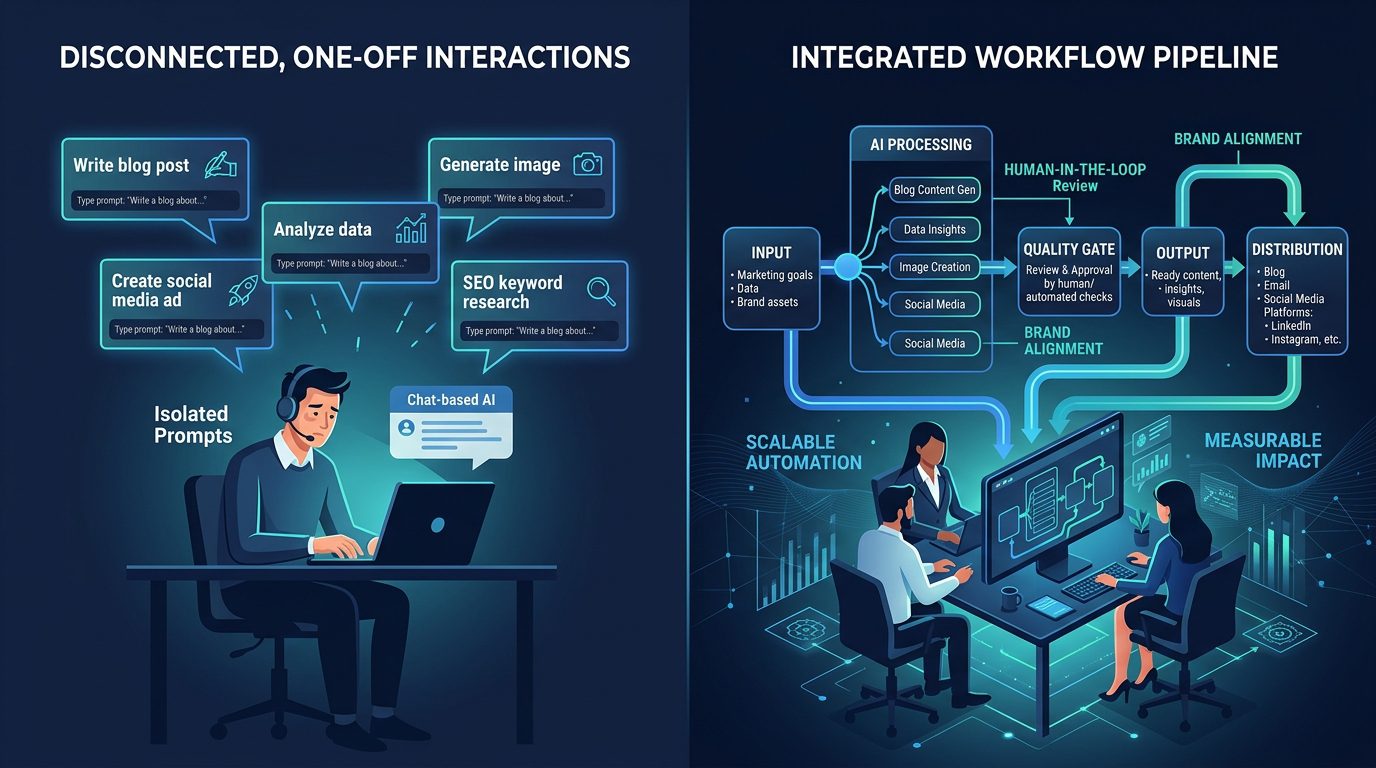
“We need to be on LinkedIn. Let’s get everyone to post and connect with prospects.” Social selling is a separate initiative, measured by activity rather than outcomes. The modifier is necessary because the practice hasn’t been integrated.
Stage 2: Strategic (Some Organizations)
“LinkedIn is our primary channel for generating pipeline. We have content pillars, a posting cadence, and signal tracking.” Social selling is a defined function with processes and metrics. The modifier is starting to fade because the practice is becoming the standard.
Stage 3: Invisible (Few Organizations)
“How we sell is based on signals — wherever they come from. LinkedIn is one channel among many.” Social selling isn’t a thing. Selling is the thing. Signals — whether from LinkedIn, website behavior, email engagement, or industry events — drive the process. This is the end state.
Buyers Already Made the Transition. Sellers Are Catching Up.
Here’s the part that should create urgency: buyers stopped distinguishing between “social” and “selling” years before sellers did.
Harvard Business Review reported that 84% of B2B buying processes begin with a referral or an existing relationship — not with a salesperson’s outreach. By the time a buyer takes a meeting, they’ve read your profile, skimmed your last ten posts, and formed an opinion about whether you understand their problem. LinkedIn’s own social selling research has shown for years that sellers who build presence and relationships on the platform create more opportunities than those who don’t.
Read those two findings together and the conclusion is unavoidable: for the buyer, the channel already disappeared. They don’t experience your LinkedIn presence and your sales process as separate things. They experience one continuous impression of you. The only people still maintaining the boundary are sellers — and the boundary is costing them deals.
Why This Distinction Matters
You might be thinking: “This is semantic. Who cares what we call it as long as it works?”
The label matters because it determines how you resource, measure, and scale the activity. When social selling is a “program,” it has a budget, a champion, and a sunset date. When it’s just “selling,” it’s embedded in how every revenue team member operates — and it doesn’t need a champion because it’s not an initiative. It’s the way you work.
This shift from program to embedded practice is what makes signal-based GTM sustainable. Programs get cut in downturns. Embedded practices survive them.
My Stake in This Argument
Full disclosure: I helped build the term I’m now telling you to retire.
At LinkedIn in 2014, “social selling” was the flag we planted. The behavior needed a name to become real inside organizations — a name is what turns a fringe practice into a budget line, a training program, and a VP’s quarterly initiative. The term did its job. It made a new behavior legible to sales leadership at a moment when most of them thought LinkedIn was a recruiting site.
But categories have lifecycles, and I’ve watched this one complete its arc. When I built SignalScout, I deliberately didn’t position it as a “social selling tool.” It’s a signal intelligence tool. That wasn’t marketing hair-splitting — it was the lesson of a decade. The value was never the channel. It was the behavioral data the channel produces: who viewed your profile, who keeps engaging, who saved your post at 11pm on a Tuesday. Those signals matter whether they come from LinkedIn, your website, or a conference badge scan.
So when I say the modifier is dying, it’s not detached analysis. It’s someone who benefited from the term admitting it has outlived its purpose. Retiring the modifier isn’t a loss for social selling. It’s what winning looks like.
What This Means for Your Strategy
If you’re still using “social selling” as a modifier, here’s what to do in 2026:
- Stop treating it as a separate motion. Integrate LinkedIn signals into your existing CRM and sales process. Don’t have a “social selling tool” — have a signal detection capability.
- Measure signals, not activity. Stop tracking posts published and connections added. Start tracking signals detected, conversations started, and pipeline influenced.
- Build for channel independence. Your signal framework should work across LinkedIn, email, events, and web. If it only works on one platform, it’s a tactic, not a strategy.
The ultimate answer to “when does social selling become selling?” is: when you stop thinking about the channel and start thinking about the signal. That transition is happening now for B2B organizations that are paying attention. And if you’re rolling this out beyond yourself, scaling social selling across a B2B team covers the organizational side of the shift.
The Litmus Test
Here’s the test for whether you’ve made the transition: ask your top-performing seller how they found their last three opportunities. If they mention LinkedIn as a source, they’re still in Stage 1 or 2. If they mention a signal — “they visited our pricing page and then engaged with my post” — they’ve made the transition to signal-based selling.
Channel-dependent vs. signal-based. The distinction is the future of B2B sales.
Conclusion
Social selling becomes selling when the “social” modifier stops being necessary to describe what you’re doing. That happens when signals — not channels — drive your outreach. In 2026, the best sellers have already made this transition. They don’t talk about social selling. They talk about signals, context, and relationships. The platform is just where those conversations happen to start.
If your organization is stuck in Stage 1 or 2 — social selling as a program instead of a practice — that’s the transition I help revenue teams make. Get in touch and tell me what stage you’re in.
This is part of the Social Selling series. Read the full framework in the Social Selling OS collection.