





If you’ve been doing social selling for any length of time, you’ve probably gone through the same tool evolution I have. You start with something simple — a scheduler, maybe a listener — and as your strategy matures, your stack matures with it.
My journey from Hootsuite to SignalScout is really the story of social selling’s evolution from broadcast to signal-based. I’ve told the strategy side of that story in the evolution of social selling from 2014 to signal-based GTM. This post is the tooling side: what I bought, why I bought it, and what each phase taught me.
One pattern is worth flagging before we start. Every phase solved the problem the previous phase exposed. Scheduling exposed the content problem. Listening exposed the attribution problem. Analytics exposed the detection problem. Each tool was the right answer — until it hit its ceiling.
Phase 1: The Scheduler (2014-2016)
My first social selling tool was Hootsuite. In 2014, social selling was a publishing game. The thinking was: post content, get visibility, attract leads. The tool’s job was to help you post more frequently.
Hootsuite did that well. I could schedule a week’s worth of posts in an hour, queue up industry articles with my commentary, and maintain a consistent presence without being glued to LinkedIn. At my peak in this phase I was pushing 15-20 posts a week across LinkedIn and Twitter, and the dashboard made it feel like progress. Green checkmarks. Filled calendar slots. Activity everywhere.
Here’s the moment that defines this phase for me. Before a two-week vacation in 2015, I loaded the queue with 28 posts — industry articles, quotes, a few of my own takes. I came back to a handful of likes, zero comments, and zero conversations. Twenty-eight posts, zero pipeline. The queue had run flawlessly. The strategy behind it was empty.
What I learned: Scheduling is table stakes. It gets you consistency, but it doesn’t get you signals. You can publish 20 posts a week and never generate a single conversation if the content doesn’t resonate. Consistency without resonance is automated noise.
Phase 2: The Listener (2017-2019)
By 2017, I realized that posting wasn’t enough — I needed to understand what my audience was talking about. I added Sprout Social for its listening and engagement features.
Sprout let me track keywords, monitor competitor mentions, and see which topics were gaining traction. The listening layer changed my content. Instead of guessing what my audience cared about, I could see the exact language buyers used to describe their problems — and write posts in that language instead of vendor-speak.

It produced real wins, too. In 2018, a listening query on a competitor’s name surfaced a thread where a VP of Sales was venting about a renewal experience. I didn’t pitch. I shared a vendor-evaluation resource and added a genuinely useful comment. Three weeks later he booked a call, and that deal closed faster than anything my cold sequences produced that year.
But wins like that were lightning strikes, not a system. Listening was still reactive. I could see what the market was saying, but I couldn’t connect it to specific prospect behavior. It told me what people were talking about. It couldn’t tell me which individual buyers were quietly researching me.
What I learned: Listening is valuable for content strategy, but it doesn’t tell you who is ready to buy. You need to connect the listening layer to individual prospect behavior.
Phase 3: The Analytics Layer (2020-2023)
The remote selling pivot of 2020 forced a more analytical approach. I started using LinkedIn’s native analytics seriously, tracking which posts got engagement, who was engaging, and what topics generated conversations.
My Sunday ritual in this phase: export post data, paste it into a spreadsheet, tag every post by topic and format, and cross-reference the engagers against my prospect list. Ninety minutes, every week. Most sellers won’t do that, and I understand why. But that spreadsheet is where every framework I now teach was born.
This phase was when the patterns emerged — the 80/20 rule, the four content pillars, the signal categories that later became the Social Selling OS framework. The biggest single finding came from auditing 94 of my own LinkedIn posts across 7 months: 53% received zero engagement, and the posts that generated real signals shared specific, repeatable characteristics. That audit eventually became the signal-first content framework I still use today.
What I learned: The data is there, but it’s fragmented across platforms. You need a unified view to connect content engagement to prospect behavior to pipeline outcomes.
The Pivot Point
In 2023, I analyzed 94 LinkedIn posts across 7 months. The data was clear: 53% received zero engagement, and the ones that generated signals shared specific characteristics. But compiling that data took weeks of manual work. I realized that if I wanted to do this systematically, I needed a tool built for signal detection — not scheduling, not listening, not analytics, but signal detection specifically.
Phase 4: Signal Detection (2024-Present)
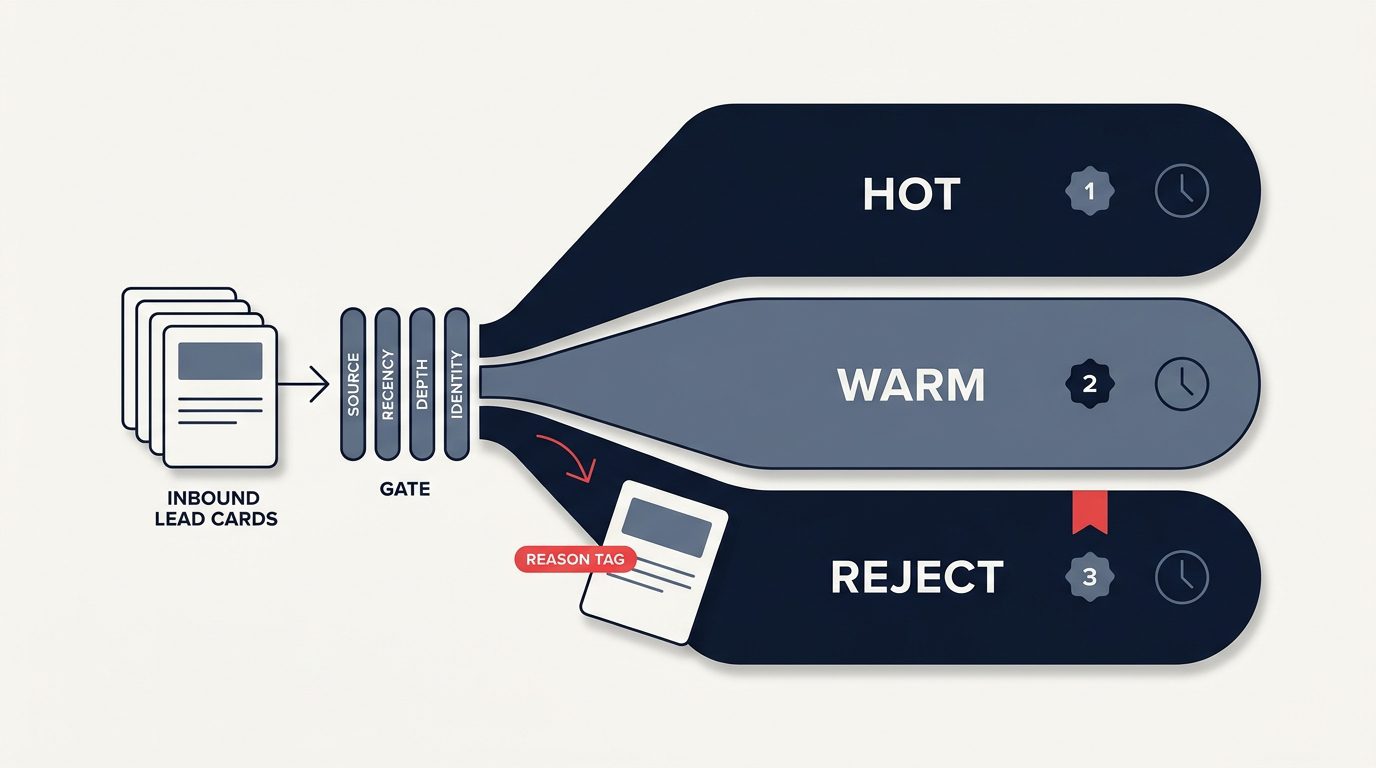
This phase is where SignalScout comes in. The core insight that drove its creation: social selling tools had been optimizing for the wrong thing. They optimized for publishing and engagement — activities. But the real value is in detection — finding the prospects who are already showing buying intent and helping you act on that information.
Detection matters because of a number I’ve validated repeatedly in my own outreach: cold InMail lands a 1-3% reply rate, warm outreach lands 8-12%, and signal-based outreach — contacting someone who already visited your profile, engaged with your posts, or saved your content — lands 40-45%. Same seller, same offer, same week. The only variable is whether the prospect signaled first. I break down the tactics behind those numbers in 7 ways to use LinkedIn for sales in 2026.
What SignalScout Does That Previous Tools Didn’t
- Unified signal view: Profile visitors, post engagers, content savers — all in one dashboard
- Signal scoring: Prioritizes prospects based on signal strength, not recency
- Pattern recognition: Identifies which content generates which signals for which audience segments
- Outreach intelligence: Provides context for every signal so your outreach is informed, not templated
The shift from Phase 3 to Phase 4 is the shift from reactive to proactive. Instead of analyzing what happened last week, you’re detecting what’s happening right now and acting on it. My 90-minute Sunday spreadsheet ritual became a two-minute dashboard review.

My social selling stack in 2014: Hootsuite.
My stack in 2026: SignalScout + LinkedIn + CRM.
The difference isn’t the number of tools. It’s what they optimize for.
2014: Optimize for posting frequency.
2026: Optimize for signal detection.
If your stack is still built around scheduling and engagement metrics, you’re optimizing for activity, not outcomes. Time to upgrade your thinking.
My Current Stack (2026)
Here’s what I actually use today:
- SignalScout: Signal detection, prospect scoring, and outreach intelligence. This is the discovery layer everything else feeds from.
- LinkedIn (native): Content creation and direct engagement. Native scheduling is good enough now that a third-party scheduler is optional.
- CRM (HubSpot): Pipeline management and signal-to-deal tracking. Every signal that becomes a conversation gets logged with its source.
- Automation layer: Workflows that route signals into CRM tasks so nothing sits unactioned for more than a day.
- Brevo: Email nurture sequences triggered by signal thresholds.
The stack is lean — five tools — but each serves a distinct function. The signal detection layer (SignalScout) feeds the engagement layer (LinkedIn), which feeds the pipeline layer (CRM), with automation and nurture handling the in-between. Total time cost to run it: 2-3 hours a week. That’s the point. The stack exists to protect the weekly time budget, not expand it.
Lessons From the Evolution
Looking back across the four phases, here’s what I’d tell my 2014 self:
- Don’t optimize for volume. Posting more isn’t the answer. Posting the right content to the right people is. My 28-post vacation queue proved that volume without resonance produces nothing.
- Signals are everywhere. The data you need to identify in-market buyers is already being generated. The question is whether you’re paying attention.
- The right tool changes everything. Going from manual analysis to automated signal detection is like going from navigating by stars to using GPS. Both work, but one is dramatically more efficient.
- The stack follows the strategy. Your tools should evolve as your understanding of what works evolves. If you’re still using the same tools you used in 2020, your strategy probably hasn’t evolved either.
The evolution from Hootsuite to SignalScout isn’t just a personal journey. It’s the story of social selling itself — from broadcast to signal-based, from activity to outcomes, from scheduling to detecting. The tools we use reflect how we think about selling. As the thinking evolves, so should the stack.
What Phase Is Your Stack In?
If your social selling stack is still in Phase 1 or 2 (scheduling or listening), you’re leaving signals on the table. The prospects who are ready to buy are already sending you signals through their behavior. A signal detection tool turns those signals into pipeline. It’s the difference between waiting for leads and finding them.
Want a second set of eyes on your own stack — or help building the signal detection layer into your team’s workflow? Work with me directly. I consult with B2B teams on signal-based GTM systems.
This is part of the Social Selling series. Read the full framework in the Social Selling OS collection.