





Ask most B2B teams to describe their buyer and they will hand you a persona built from a survey, a few interviews, and a summary of last year’s closed-won accounts. Then they will spend the next four quarters targeting that description with content, ads, and outreach. The persona rarely gets updated. Buyer priorities shift every month.
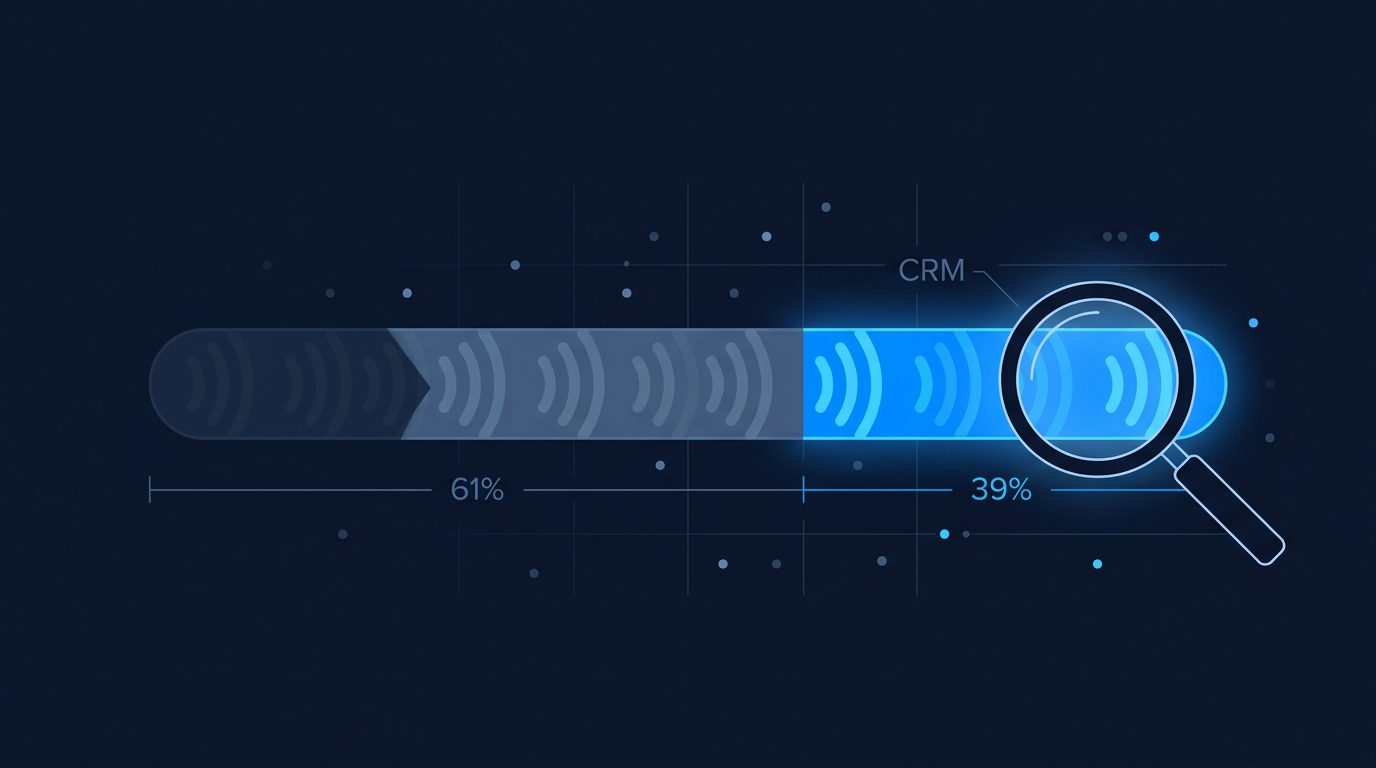
Here is the uncomfortable number underneath it. By the time a buyer fills out a form or answers a cold email, most of the decision is already made. The average B2B buyer is roughly 61% through the buying journey before they ever engage a seller, according to the 6sense 2025 B2B Buyer Experience Report. Your CRM, your lead forms, and your decay reports only capture the tail end of that journey.
That is not a data problem you can buy your way out of with another enrichment vendor. It is a customer intelligence problem. The information you need already exists inside your own business, in signals you are not collecting and deals you are not interviewing. This is how to build the loop that closes the gap.
TL;DR
- The Blind Spot: Buyers are about 61% through the journey before they engage a seller, so your CRM records the last 39%, not the real story.
- The Cost: You staff, target, and message against the end of a decision that was mostly made in the dark, then wonder why pipeline feels random.
- The Fix: A customer intelligence loop that pulls from signals you already own, product usage, content engagement, sales calls, and win/loss.
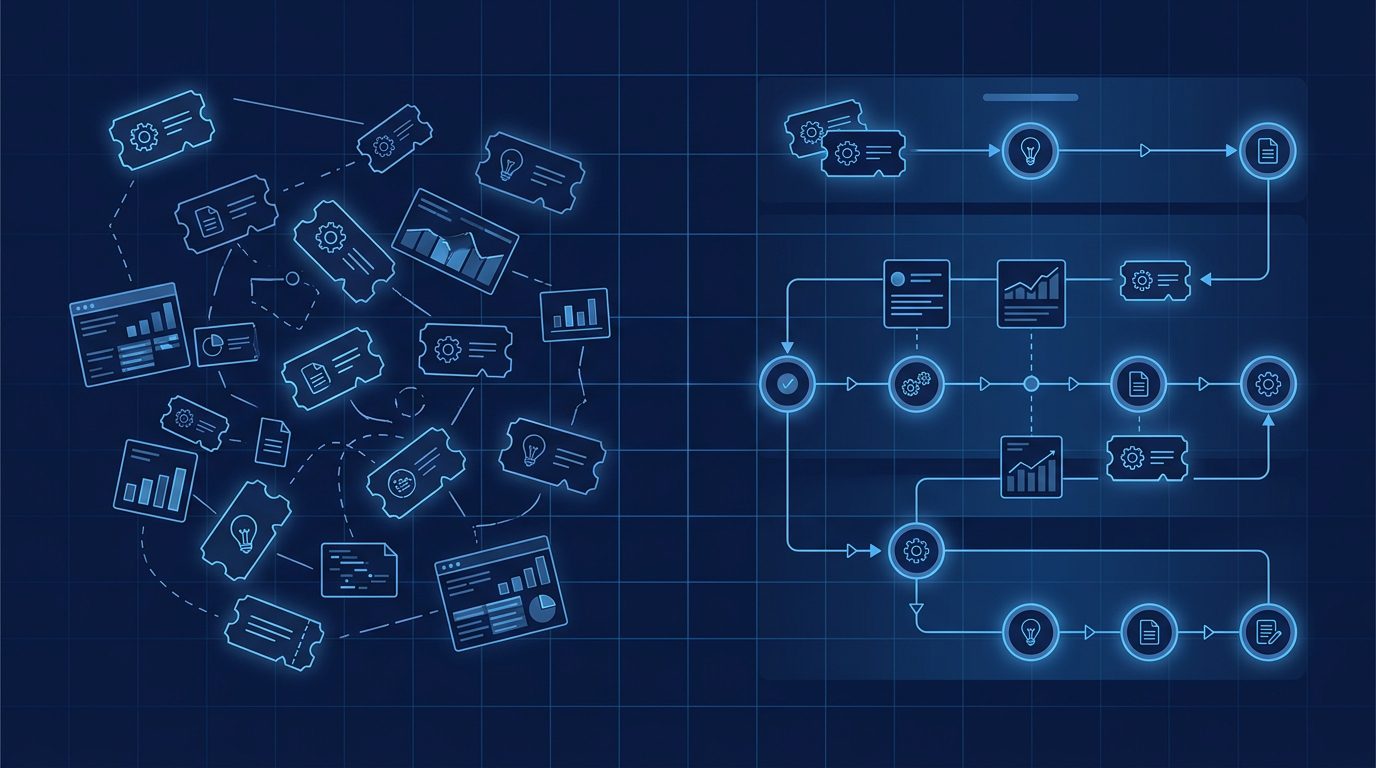
- The Loop: Capture, Cluster, Translate, Re-aim. Four steps, run continuously, not once a year.
- The Start: Interview five recent closed-won and five closed-lost deals this month and map what you missed before the deal ever reached you.
What Customer Intelligence Actually Means
Customer intelligence is the practice of building your picture of the buyer from evidence you already own, including sales calls, product usage, content engagement, and win-loss reasons, then updating it continuously rather than once a year. The picture is never finished, because the buyers keep changing and the evidence keeps arriving.
The Last 39% Problem
Sales teams are trained to treat first contact as the beginning of a deal. In reality it is closer to the end of the research phase. By the time someone replies to your sequence, they have usually read the comparison pages, sat in the private community thread, and asked two trusted peers what they use. The Gartner B2B buying journey research has described this for years: buying is a self-directed, non-linear loop, not a funnel that starts when a rep shows up.
If your entire intelligence stack starts recording at form fill, you are optimizing the last third of a decision with none of the context from the first two thirds. That is why two deals that look identical in the CRM can close completely differently: one buyer arrived already convinced, the other arrived already skeptical, and your pipeline report shows the same three fields for both.
If your buyer data begins at form fill, you are not measuring demand. You are measuring the last 39% of a decision that was mostly made before you knew the account existed.
Why Your Persona Is Already Out of Date
Personas decay for the same reason any snapshot does: the thing it describes keeps moving. A persona is a picture of a buyer at a moment in time, and the moment passes. New tools enter the stack, a category gets renamed, an economic shift changes what the board will fund, and the persona that made your last campaign work quietly becomes a description of a buyer who no longer exists.
Worse, most persona documents are built from opinions rather than evidence. They are assembled in a workshop, not mined from deals. They describe what the team believes about the buyer, not what the buyer actually did. When you cannot trace a persona claim back to a real conversation or a real signal, you are not doing customer intelligence. You are doing brand positioning by guesswork with a stock photo attached.

The 94% of B2B buyers who now use large language models somewhere in their process, also from the 6sense study, makes this faster and less visible than it used to. Their research is private, synthesized, and instant. You will never see the prompt. You can only see the pattern it leaves behind in the deals you win and lose.
What Customer Intelligence Is (and Is Not)
Customer intelligence is often confused with analytics. Analytics explains what happened to your funnel. Customer intelligence explains who your buyer actually is, based on evidence, and updates that picture continuously. One looks backward at your dashboard. The other looks at the buyer and feeds everything else.
| Dimension | Analytics | Customer Intelligence |
|---|---|---|
| Core question | What did the funnel do? | Who is the buyer, really? |
| Data source | Your own funnel events | Buyers: calls, usage, win/loss, community |
| Update cadence | On demand report | Continuous loop |
| Owner | The analyst | The whole go-to-market team |
| Output | A chart | A sharper ICP, message, and target list |
The distinction matters because analytics can be perfect and still leave you blind. You can have immaculate funnel reporting and still not know why your best-fit accounts never replied, because the answer happened 61% earlier than your first tracked event.
The Customer Intelligence Loop
The loop has four steps, and the order is the discipline. You cannot cluster what you did not capture, and you cannot re-aim against a translation you never made.
Collect the raw evidence: sales call recordings and notes, product usage, content engagement by account, support themes, and the actual reasons in closed-won and closed-lost. Most of this already exists. It is scattered, unowned, and never read as one dataset.
Group the evidence into patterns by segment, not by anecdote. Which objections repeat across your best accounts? Which trigger preceded the fastest deals? Cluster until the pattern is boring and repeats, then trust it.
Turn the pattern into the language of the work: a sharper ICP, the three messages that match real buyer concerns, and the signals that precede a deal. This is where most teams stop, because a document feels like an outcome. It is not.
Feed the translation back into targeting, content, and outreach, and define one metric that tells you whether the loop worked. Then run it again. A customer intelligence loop that runs once a year is a persona workshop with extra steps.
The Signals You Already Own
Nobody needs a new data vendor to start. The highest-value intelligence is already inside the building, and it is usually ignored because it does not arrive as a clean field.

I stopped building personas in a workshop. Now I read every closed-won and closed-lost call from the last quarter and let the buyers write the persona for me. The accounts describe themselves if you actually listen to the recordings.
Three categories carry most of the value. First, conversation data: the objections, the trigger events, and the words buyers use for their problem before your category language gets applied. Second, behavior data: which accounts read what, which pages they return to, and how long they circle before they surface. Third, outcome data: the honest reasons inside win/loss, which almost nobody records in a usable form.
Peer research is where a growing share of the journey now happens. In a 2025 Wynter study of B2B SaaS decision-makers, 72% said they start by asking trusted peers in private communities before they ever talk to a vendor. That conversation is invisible to your tracking. But the questions asked in it show up in your call transcripts, if you bother to tag them.

What I Learned Running This Loop
I ran my first version of this loop the hard way, by sitting in on recordings of deals we lost and forcing myself to write down the actual reason instead of the reason the rep reported. The gap between the two was uncomfortable.
The pipeline said we lost on price. The recordings said we lost because the buyer never believed we could support their team after the sale, and the price objection was just the polite exit. That single re-read changed our onboarding proof, our case studies, and the order of the demo. Nothing about the product changed. What changed was what we knew about the buyer.
The second lesson was about speed. We had been running this as an annual research project, which meant we were always targeting a twelve-month-old picture of the market. When we moved the capture step to continuous, tagging calls weekly instead of revisiting them in a quarterly review, the loop started telling us things while they were still true. Continuous beats thorough when buyer priorities shift faster than your research cycle.
The third lesson was the hardest, and it is the one I would hand to any team starting today. The value is not in the capture or the clustering. It is in the re-aim. Every insight you fail to feed back into targeting, content, and outreach becomes expensive trivia. The loop only compounds when it closes.
Where Teams Go Wrong
Three failure modes show up again and again. The first is treating intelligence as a research report instead of an operating loop, so it lives in a slide deck and dies there. The second is collecting everything and clustering nothing, drowning in a data lake with no pattern anyone trusts. The third is the most common: using customer intelligence to confirm the persona the team already liked instead of letting the evidence overwrite it.
If your customer intelligence program only ever confirms what the team already believed, it is not intelligence. It is a very expensive mirror. The loop is supposed to change what you do, not decorate what you planned.
A 30-Day Start
Five closed-won, five closed-lost, from the last two quarters. Ask what happened before they contacted you, not just why they chose you. Record and tag the answers.
Look for the event that preceded the fastest deals. A trigger you can detect is worth more than a demographic you can buy.
Take the single strongest pattern and change one piece of content, one outreach line, or one page to match it. Ship it this month, not next quarter.
Choose one number that tells you the re-aim worked: reply rate on the changed sequence, meetings from the newly defined trigger, or win rate on the new segment. Then schedule the next run.
The Takeaway
Your buyer is telling you who they are in the calls you recorded, the accounts that engaged, and the deals you lost for the wrong reason. Most of that story happens before your funnel ever notices. The teams that win the next cycle will not be the ones with the biggest enrichment budget. They will be the ones who built a loop that turns their own buyers into the source of truth, and then actually changed what they shipped because of it.
The same discipline shows up in how you turn customer intelligence into a signal loop and how you route those signals into the work. Intel that never reaches the operator is just archiving. Build the loop, close it, and run it again.
You are not missing a data source. You are missing a loop. Capture what your buyers already told you, translate it, and re-aim the go-to-market motion at it before the next quarter makes the picture stale again.
Customer Intelligence Questions, Answered
What is the difference between customer intelligence and analytics? Analytics answers what your funnel did, from your own event data. Customer intelligence answers who the buyer really is, from calls, usage, and win-loss. The first tells you where deals stalled; the second tells you who to target and what to say.
How is customer intelligence different from a buyer persona? A persona is a snapshot, and most are assembled from opinions rather than evidence. Customer intelligence is a standing loop, so the picture stays current instead of drifting until someone schedules the next workshop.
What data feeds a customer intelligence loop? Three streams carry most of the value: what buyers say on calls, how accounts behave before they surface, and why deals are really won or lost. Most of it is already sitting inside the business.
How often should the loop run? Continuously, with a full re-read at least quarterly. Buyers change faster than an annual research cycle, so treat it as a standing process, not a yearly project.