





Last quarter I asked five people at the same B2B company to describe what they sell in one sentence. Five answers came back. Five. The head of sales talked about pipeline. The founder talked about category. The product marketer talked about features. A buyer listening to all three would have thought they worked for different companies.
That is a positioning problem, and it is not a copywriting problem. The words already exist. They just do not agree with each other, and none of them filter anything.
Most positioning work fails the same way. It produces a slide, a new homepage hero, a messaging doc, and a launch email, and then the business behaves exactly as it did before. Nothing gets refused. No account gets disqualified earlier. No content gets killed before it ships. The positioning was a slogan wearing a strategy costume.
TL;DR
- The problem: Positioning that lives in a deck and cannot be repeated by your own team is decoration, not strategy.
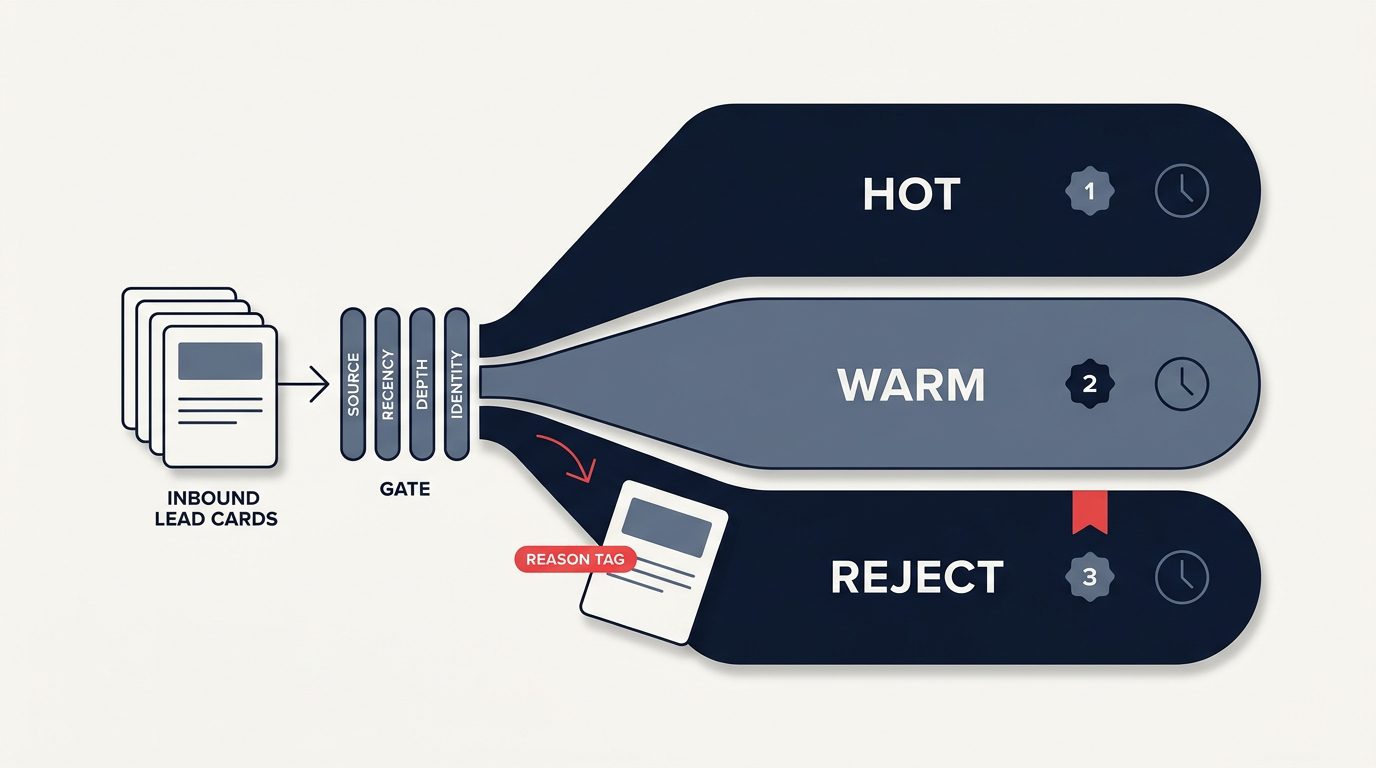
- The definition: Positioning is a filter. It decides which accounts you chase, which claims you make, and which work you refuse.
- The test: Four questions on who it is not for, what buyers do today, what only you can claim, and what you will stop shipping.
- The payoff: A real position shortens the sales cycle because the wrong buyers rule themselves out before the first call.
The Deck Is Not the Position
I have sat in the room where the positioning gets decided. It is usually two days, a whiteboard, and a lot of words that everyone agrees sounds smart. The output is a pyramid with a category on top and three proof points underneath. It is a good artifact. It is not a decision.
A decision changes behavior. If your positioning is real, the SDR team stops opening with the same three pain points every competitor opens with. Marketing stops producing content for the accounts sales keeps losing. The founder stops describing the company differently on every podcast.
Positioning that cannot be repeated by the person answering the phone is not positioning. It is internal branding.
What a Filter Actually Does
The useful mental model is not a statement. It is a filter with a hole the exact shape of your market. Everything that fits goes through. Everything that does not gets rejected early, while rejection is still cheap.
| Question | Slogan answer | Filter answer |
|---|---|---|
| Who is this for? | Modern revenue teams | Series A to C B2B companies with a founder who sells and no content system |
| What do we refuse? | Nothing, we can help anyone | Enterprise procurement cycles, agencies reselling our work, anyone who needs a logo more than a pipeline |
| What do we repeat? | End to end platform | One sentence a customer said on a call last week |
| How do we know it worked? | Brand awareness went up | Fewer unqualified discovery calls and a shorter path from first touch to proposal |
Look at the right column. Every cell costs something. That is how you know it is positioning and not marketing copy. A position you cannot lose a deal to is a position nobody can buy.
The Four-Question Filter
This is the test I run before any campaign, landing page, or content push. If a team cannot answer all four in plain language, the campaign is not ready, and the problem is upstream of the brief.

Answer those four and you have something a sales team can use on a Tuesday afternoon. Skip them and you have a launch deck that will be rewritten in two quarters by whoever replaces the last person who owned it.

Positioning Has to Survive Contact
Here is the test I actually trust, and I have never seen it fail. Read your homepage headline to someone who does not work in your category and ask them to explain it back to you. Then read your last three sales call openers. If the two do not sound like the same company, your positioning only exists on the website.
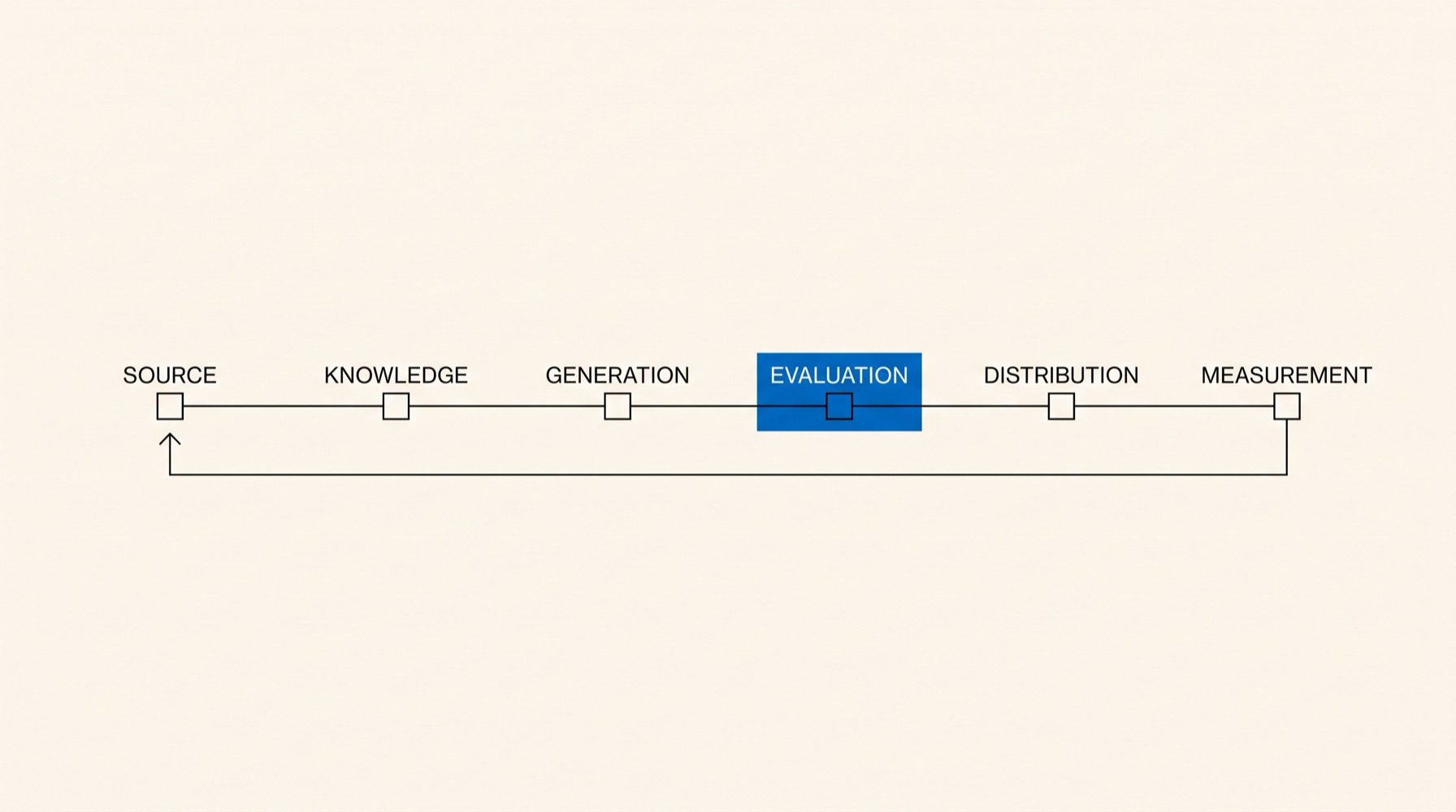
I have watched this play out across content engines and social selling programs for years. The companies that win the room are not the ones with the cleverest line. They are the ones whose line survives every handoff: the ad, the landing page, the SDR opener, the deck, the proposal, the follow-up. Same claim. Same proof. Same refusal.
The failure mode is always the handoff. Strategy writes a position. An agency rewrites it into a campaign. A freelancer rewrites it into a blog post. An AI tool rewrites it into something smoother and more average. Six months later the company has a tone of voice and no position at all.
Ehrenberg-Bass has made the same point from the research side for two decades: growth comes from being easy to recall and easy to recognize, not from being seen more often. You cannot be recalled for something you never claimed. Their mental availability research is the long version of that argument.
That is why I treat the positioning line as infrastructure, not creative. It has an owner, a version, and a review date. It shows up in the content brief before anyone writes a sentence. And when a campaign cannot trace back to it, the campaign dies in review instead of dying in market.
Where It Breaks in AI-Driven Content
Generative tools did not create the sameness problem. They accelerated it. A model trained on the average of your category will produce the average of your category, and it will do it faster and cheaper than the agency that used to produce the same thing slowly.
So the work moves upstream. If the model can generate the paragraph, the advantage is in knowing which paragraph should never exist. That is a positioning call, made by a person with taste, evidence, and the authority to say no. I wrote about that judgment gap in editorial judgment as the one moat AI cannot copy, and positioning is the input that makes that judgment possible.
Nielsen’s 500-campaign analysis put 47% of a campaign’s sales lift on the creative and 9% on targeting. Most teams still spend their optimization energy on the 9%.
The teams getting value from AI right now are not the ones with the best prompts. They are the ones with a position sharp enough that the model has something specific to be consistent about. Everyone else is paying a subscription to sound like their competitors, at scale.
This is also why direction beats volume every time. More output from a blurred position just means more people get the wrong impression of you, faster.
Install It in a Week
You do not need a six-week brand sprint. You need four artifacts and one meeting that repeats.
One page. The four answers, written in sentences a sales rep would actually say out loud. No adjectives. No category invention unless you can defend it.
One line. A single sentence that carries the position, short enough to survive a slide title. Test it on someone outside the category before it goes anywhere near a designer.
One refusal list. The accounts, requests, and content types you will decline. Keep it visible. This is the part everyone skips and the only part that proves the position is real.
One review ritual. Every brief starts with the position line and ends with the question: does this piece only make sense coming from us? If the answer is no, it is not ready. That is the same discipline behind a signal-first content framework, applied before production instead of after.
Then run it for a quarter. Watch what changes. The first signal is not brand awareness. It is the quality of the inbound: fewer wrong-fit calls, better questions on the first one, and a sales team that stops improvising the opening.
Three Tells of a Slogan
You can usually spot a slogan inside one meeting. It has three tells, and they show up in the same order every time.
It cannot be wrong. A real position has an opposite, and someone in the market holds it. If your line would still be true with the company name swapped for a competitor, it is not a position. It is a category greeting card.
Nobody can disagree with it. When a room of eight people approves a sentence in ninety seconds, they did not agree on a direction. They agreed on nothing. Real positioning costs someone a budget, a segment, or a pet campaign, and that person will argue.
It describes a category, not a customer. Buyers do not wake up wanting a platform. They wake up with a specific mess: a pipeline that looks fine until you check the close rate, a founder who is the only person who can sell, a content team shipping volume nobody reads. Position against the mess, not the market map.
I use these tells as a screening tool before the four questions. If a line fails all three, the team is not ready to position, and another workshop will only produce a better-looking slogan.
The Cost of Skipping This
Buyers finish most of their research before they talk to you. In 6sense’s 2025 buyer survey, 61% of the B2B buying journey was complete before the first seller conversation. That means your position is doing the selling in rooms you are not in, in conversations you will never see, in the summaries buyers give each other. If your own team cannot repeat it, a buyer cannot either, and the deal goes to whoever was easier to explain.
None of this requires a new category or a rebrand. It requires one decision, written down, defended in review, and repeated until it sounds boring inside the company. Boring and consistent beats clever and different every quarter.
Positioning is not the sentence on your homepage. It is the set of decisions your team makes when nobody is watching, and the work you are willing to lose. Write the filter, then let it do the work.
If you want help pressure-testing yours, I run the same filter across messaging, content, and outbound before anything ships.