





This week every KSB post kept landing on the same argument. The scoreboard changed.
Reach, likes, and vendor scores are not the numbers that predict revenue anymore. The operators who win are the ones who build a signal layer underneath them.
TL;DR
- The signal moved: a like is noise, a pattern of engagement is intent, and the pattern is the part you can act on.
- Measurement is a system: one vendor score samples one prompt set on one day, not your market.
- Citations beat rankings: 88% of AI Mode citations come from pages outside Google’s organic top ten.
- The customer you won is a signal: retention is where the profit lives, and almost nobody markets to it.
- The system sets the ceiling: a slow pipeline is a constraint problem, not a hiring problem.
Here is the through-line. For a decade the scoreboard rewarded volume: more posts, more likes, more traffic, a higher visibility score.
This week’s posts all argued that those numbers flatter you without telling you what to do next. The number that matters is the one that predicts behavior. Predicting behavior takes a system that captures it, scores it, and routes it somewhere useful.
A like is noise. A pattern is intent.
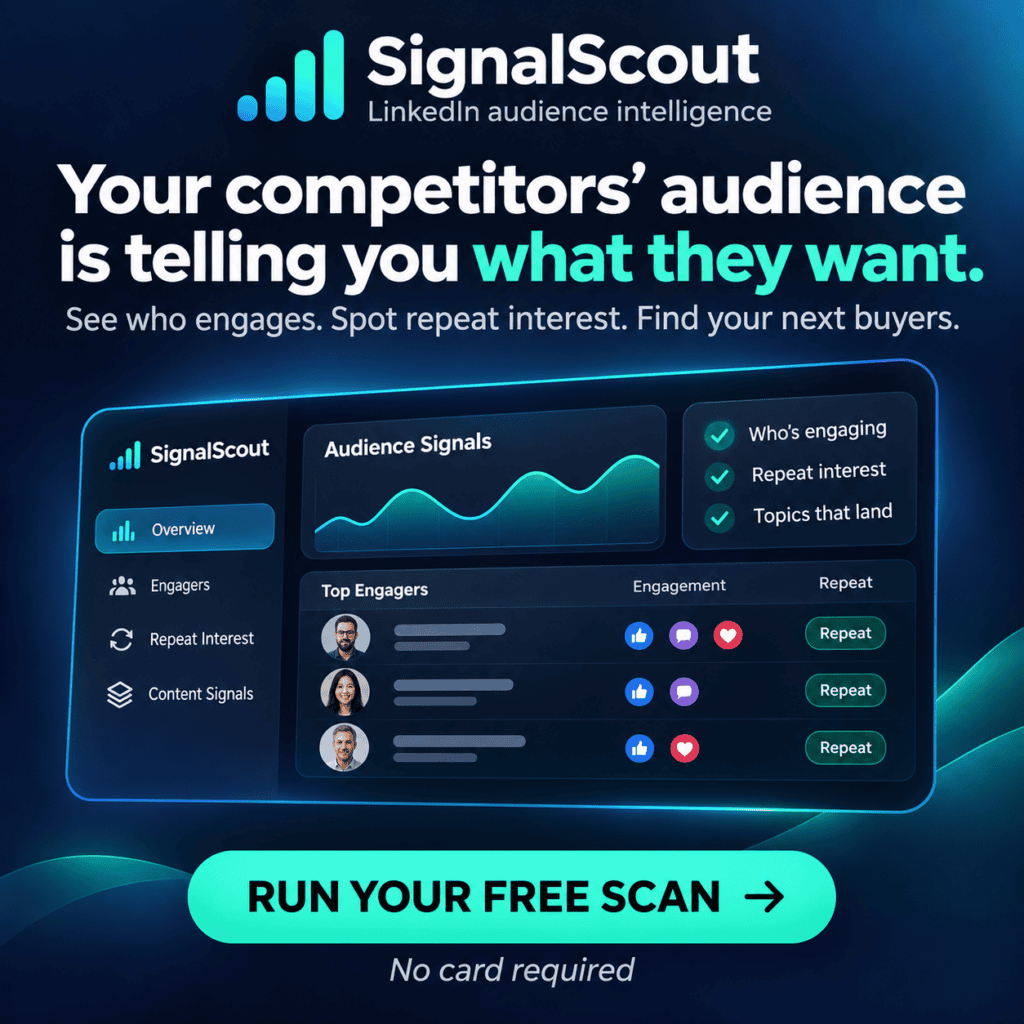
The clearest version of the week is 5 LinkedIn Engagement Signals That Predict Buyers. The post argues that most teams treat every like, comment, and view as equal, and they are not.
A like is noise. A pattern of engagement is intent. The five signals that matter are a competitor follower, a repeat commenter, a profile researcher, a content sharer, and the silent watcher.
Stack them per account and the picture sharpens. One signal is interesting. Two suggest evaluation. Three inside 30 days is a buying cycle in progress.
The post cites the LinkedIn B2B Institute figure that 95% of B2B buyers are not in-market at any given time. That is why memory beats chasing. Across the programs Koka has run, signal-triggered outreach produced 3 to 4 times more pipeline than cold outreach to the same persona.
Spotting the signal is half the job. Build a LinkedIn Engagement Intelligence Pipeline shows the other half: capturing it automatically.

The build watches your posts, scrapes every engager through Apify, enriches each profile, and scores that person against your ideal customer profile in Airtable. Every engager becomes a scored contact with no manual research.
The gap between manual and automated is wider than it sounds. Clicking profiles by hand captures roughly a twentieth of the engagers. The pipeline captures 100%, pulling 10 or more structured fields per person, from title and company to open-to-work status.
The post is blunt about the failure mode too. Skip the sleep module and the whole chain fails silently for weeks without a single error.
A like tells you someone saw a post. A pattern tells you someone is evaluating. Only one of those is worth a seller’s afternoon.
A vendor score is a sample, not a measurement.
How to Measure AI Search Visibility opens on a scene most teams know. Your AI visibility score went up four points, and nobody can say why.
The post argues that a single vendor number reflects one prompt set on one day. Treat it as a smoke test, not a read on your market.
The supporting data points in different directions, which is the point. Ahrefs tracked 232.8 million US desktop searches and found AI Overviews reached 82.91% of branded searches by September 29, 2026.
Semrush found 45% of marketing leaders cannot measure brand visibility in AI answers at all.
A composite score cannot hold both truths, so the post replaces it with three layers that can: share of answers, citation quality, and branded demand.
Content for AI Search: What Actually Gets Cited explains why ranking and citation are now different games. Moz analyzed nearly 40,000 AI Mode queries and found 88% of citations come from pages outside Google’s organic top ten. SparkToro and Similarweb put zero-click US Google searches at 68% in early 2026.
A model lifts a claim, a number, or a sentence. The page that gets cited is rarely the page that ranks.
The signals you already own
Two posts made the case that the strongest signal is already inside the business. Differentiation Is the Moat AI Cannot Copy cites a 2026 Wynter study. In it, 64% of senior marketers found it hard to tell competing vendors apart.
When shown five real value propositions with the names stripped out, respondents averaged 1.86 out of 5, barely above random guessing. The cause is commodity output: Ahrefs found 74.2% of newly published webpages contain AI-generated content.
Customer Loyalty Starts After the Sale points at the signal most teams ignore. Retention is where the profit lives.
The second, third, and fourth year of a customer is worth more than the first, and almost no marketing budget is aimed at it. The post’s framing is simple: attach a marketing goal to keeping accounts longer, and measure lifetime value before you claim a retention strategy.
The last post in the thread is about the machine that produces all of this. Your Content Production System Is the Bottleneck argues that a slow pipeline is a system problem, not a staffing problem.
A 2025 AirOps survey found research eats 65% of content team time. A 2026 Knak survey found 85% of marketing teams missed a launch to a workflow constraint. Approvals, not writing, caused most of those misses.
What I run
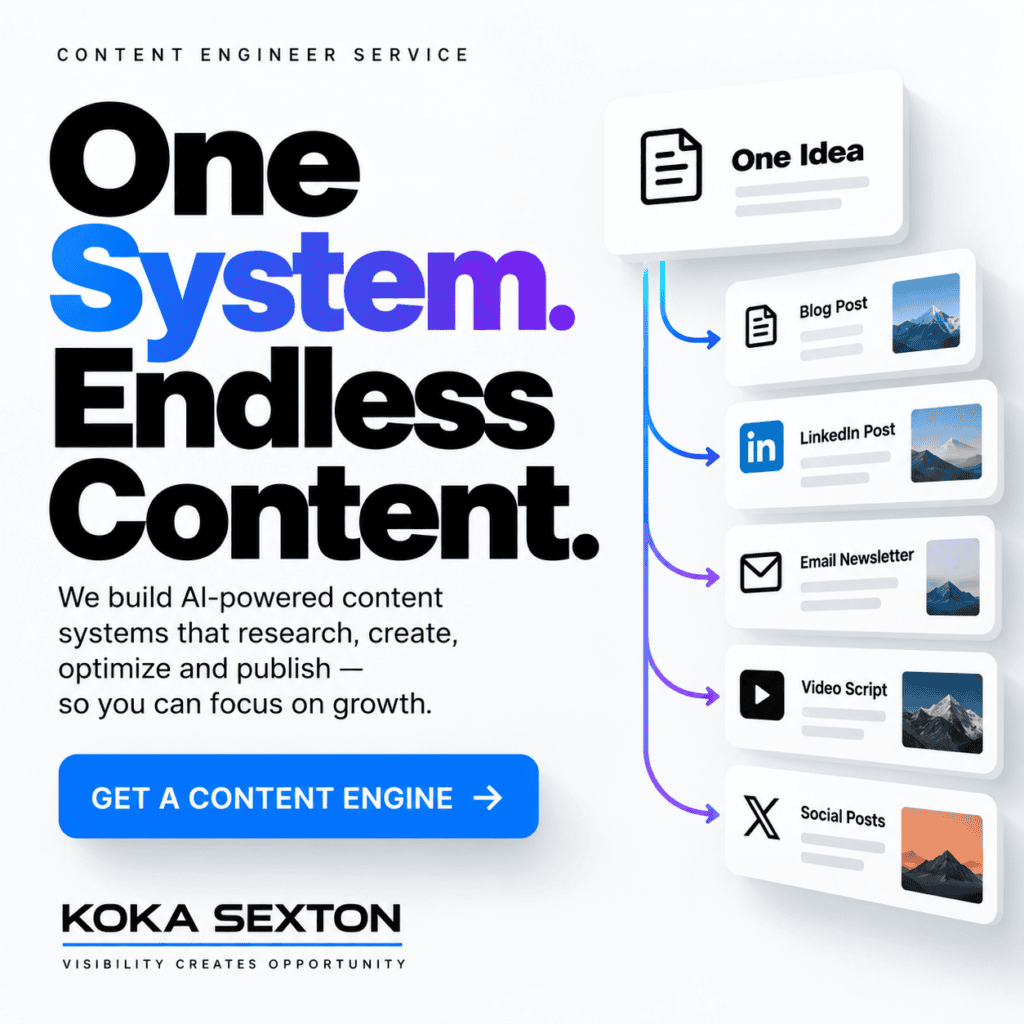
I should be the proof this works. I run three content properties with one operator and a nightly system. The drafting is automated.
What is not automated is the signal layer: the capture, the scoring, and the two gates between a draft and a publish. The machine does the volume. The judgment stays human.

Stop counting likes and start reading patterns. A competitor follower, a repeat commenter, a profile researcher. Those are the signals that pay. Build the system that captures them, or watch the pattern walk to the next seller who did.