




A 7-day campaign launch does not come from working faster. It comes from an operating model where systems handle research, messaging, creative iterations, segmentation, personalization, testing, and reporting, so work stops passing between six people and fourteen Slack threads. The question that unlocks it: what would it take to have this live by next Friday?
TL;DR
- The gap: Most teams need about a month to launch a campaign. I build systems that get one live in 7 days.
- The cause: The delay is rarely the work. It is the handoffs: six people, fourteen Slack threads, and a calendar that looks like a crime scene.
- The fix: Turn the grunt work into systems, then change the question from “how fast can we ship?” to “what would it take to be live by next Friday?”
- The line: Everyone knows how to use AI now. The edge is turning it into operational leverage (see the AI marketing productivity paradox).
Ask a marketing team how long a campaign takes and you will hear “about a month.” Nobody argues with that number because everybody has lived it. I stopped accepting it, and what replaced it is a different way of building the operation, not a faster way of working inside the old one.
The Question Changes the Outcome
Two questions produce two different plans. “How fast can we get this campaign out?” invites everyone to work a little harder inside the process they already have. “What would it take to have this live by next Friday?” forces the process itself onto the table. You cannot answer the second question without naming what is slow and deciding what to remove.

The first question optimizes effort. The second redesigns the system. Only the second gets you from 30 days to 7.
Where the 30 Days Actually Go
The work itself is not what takes a month. A strategist can draft messaging in an afternoon. A designer can turn around creative in a day or two. The month is made of the gaps between those pieces: a brief waits for review, a review waits for a meeting, feedback lands in a thread, and the thread gets lost under thirteen others.
That is the part I mean by six different people, fourteen Slack threads, and a calendar that looks like a crime scene. Every handoff adds latency and loses context. By the time the campaign reaches the person who launches it, nobody holds the whole picture.
The Seven Workstreams Systems Take Over
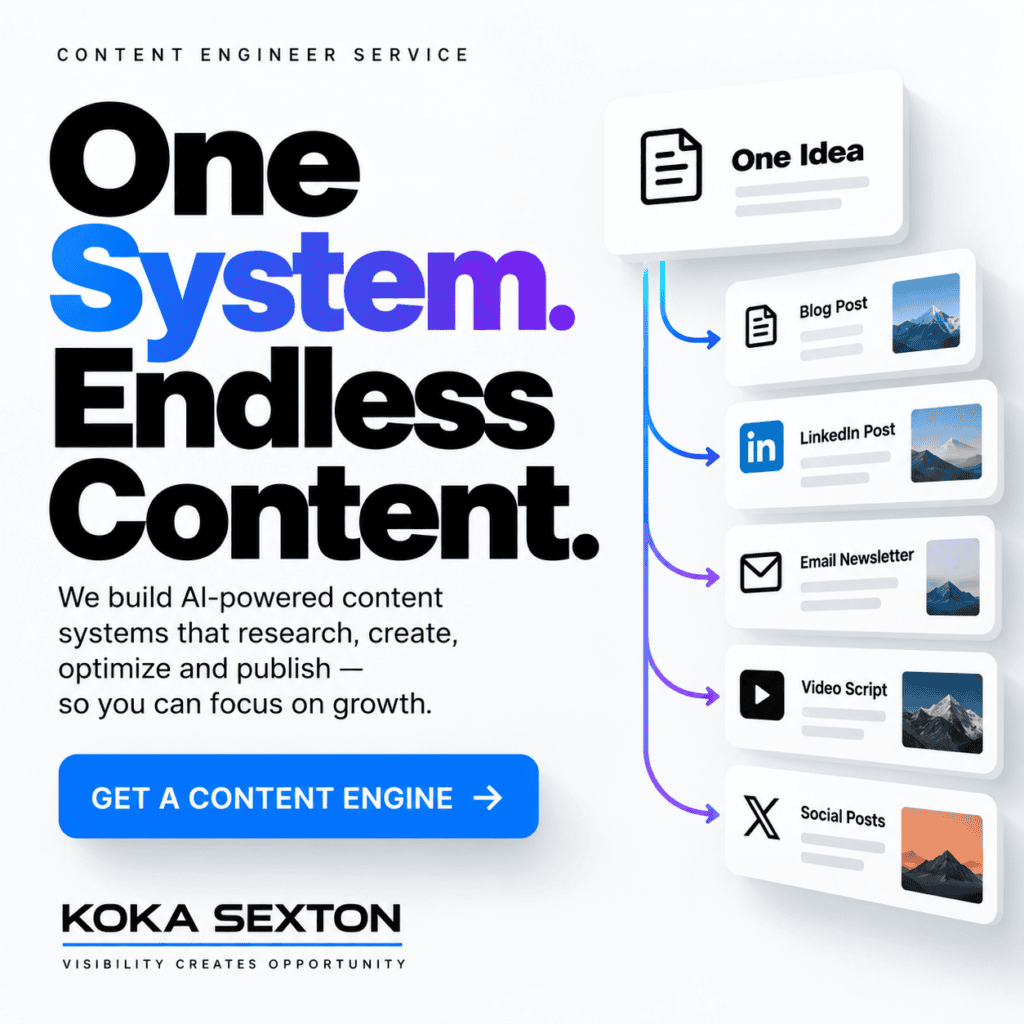
I do not work four times harder. I built the machine. AI handles the grunt work that normally moves between people:
- Research. Market, audience, and competitor context gathered before anyone writes a word.
- Messaging. A working draft of positioning and copy to react to instead of a blank page.
- Creative iterations. Variants produced in volume so the choice is between real options.
- Audience segmentation. Who gets which message, decided up front.
- Personalization. The tailoring that usually gets cut when time runs out.
- Testing. Variants set up to learn from, not just to ship.
- Reporting. Results that arrive without someone assembling a deck.
None of these replace judgment. They remove the waiting. The person making the call gets a finished first pass instead of a request for one. I laid out how that grows from one automation into a full structure in the four stages of building an AI operating system.
AI Skills vs. Operational Leverage
Knowing how to use AI is no longer a differentiator. Everyone has access to the same models and most marketers have opened one this week. The difference is what happens after the prompt: whether the output is one person’s faster draft or a step in a system that runs with owners, a schedule, and memory.
That is the gap I care about. A faster draft saves an hour. A system that carries research into messaging, messaging into creative, and creative into testing removes the handoffs, and the handoffs were most of the month. My own setup runs on named specialists with defined lanes, which I described in how 8 AI agents run my marketing ops, and an operator layer that handles the daily follow-through, covered in meet Thor, my AI COO.
Tools make a task faster. Systems make the handoff disappear. A 30-day campaign is mostly handoffs.
What It Takes to Be Live by Next Friday
You do not need my exact stack to start. You need to work through the question honestly:
- Map the handoffs. List every person and approval between brief and launch. The count is usually larger than anyone expects.
- Find the waiting. Mark where work sits idle. That idle time, not the effort, is your month.
- Automate the first pass. Let a system produce the research, draft, and variants so people start from something real.
- Keep people on the decisions. Approvals, positioning calls, and anything that goes out under your name stay with a human.
- Cut the review layers. Replace the serial chain with one owner and one review window.
- Set the date first. Pick next Friday, then work backward. The date does the editing for you.
If you are drowning in tools instead, start with why more AI tools often make marketing teams slower. Consolidation comes before speed.
FAQ: Launching a Campaign in 7 Days
Is a 7-day campaign launch realistic?
It is when the delay was handoffs and not effort. I have built systems that get a campaign another team would run over 30 days launched in 7. A campaign that needs original research, legal review, or a large production shoot will carry real constraints, but most of the calendar in a typical launch is waiting.
Does this mean AI replaces the marketing team?
No. The systems take the grunt work: research, first drafts, variants, segmentation, and reporting. People keep the decisions and the approvals. The point is to remove the waiting between those decisions.
What is the difference between using AI and operational leverage?
Using AI is a person getting a faster draft. Operational leverage is a system with owners, a schedule, and memory that carries work from one step to the next without anyone relaying it.
Where should a team start?
Pick one campaign and ask what it would take to be live by next Friday. Map the handoffs, find where work sits idle, and automate the first pass. Start with one workflow, not a transformation program.
Change the question. “How fast can we ship this?” gets you a slightly faster month. “What would it take to be live by next Friday?” gets you a different operating model.
Sources
- Koka Sexton on LinkedIn: Most teams need a month to launch a campaign. I need 7 days.
- Kokasexton.com: The four stages of building an AI operating system
- Kokasexton.com: How 8 AI agents run my marketing ops
- Kokasexton.com: Meet Thor, my AI COO
- Kokasexton.com: The AI marketing productivity paradox