





TL;DR
- The Problem: B2B demand generation still funnels every buyer through a gated form or a scheduled demo that converts 2 to 3 percent at best and silently repels everyone else.
- The Data: Buyers spend only 17 percent of the purchase journey meeting with suppliers and finish most of their evaluation before they ever contact sales.
- The Reframe: The form is not a qualification filter. It is a signal suppressor that hides the self-serve majority you already paid to find.
- The Fix: Unbundle the demo with interactive tours, ungated trials, and product-led experiences that let the 95 percent self-qualify on their own terms.
- The Result: Time the human touch to real intent signals, and you turn a 2 percent form into a full-funnel demand engine.
Every demand generation leader I talk to is running the same experiment and getting the same silent result. They spend real money driving traffic to a landing page. The page loads. The visitor reads. And then, at the exact moment they were supposed to convert, the visitor hits the form and disappears.
We call that a conversion rate, shrug, and pour more budget into the top of the funnel. But the form is not a neutral data collection tool. It is a tax. And in 2026, it is taxing the wrong side of the market.
Here is the uncomfortable math. HubSpot’s 2026 marketing statistics roundup keeps conversion rate optimization near the top of every serious marketing agenda for a reason: the median landing page form converts somewhere around 2 to 3 percent. The other 97 percent, the people who clicked through because they had a real problem, just walked away. Most of them were not ready to book a demo. They were ready to learn. And instead of giving them a way to learn on their own terms, we demanded their email address and a calendar slot before we would tell them anything.
This is the demo-gate tax. It is the quiet cost of making every buyer prove intent before you will share value. And it is why so much paid demand generation produces a full top of funnel and an empty pipeline.

The Gate Is the Leak
The conventional wisdom says a form filters out the tire-kickers and surfaces the serious buyers. That was true a decade ago, when the only way to see a product was to talk to a rep. It is not true anymore. A buyer who wants to self-serve can find screenshots, reviews, comparison pages, and a competitor’s free trial in the next tab. The form does not filter them out of the market. It filters them out of your funnel.
Think about what a gate actually does. It asks a buyer to surrender contact information and commit to a sales conversation before they understand whether you can help. For the small slice of the market that is already in a buying cycle, that is a reasonable trade. For everyone else, it is an unreasonable one. So they leave. And the ones who stay are not necessarily your best buyers. They are the ones most willing to fill out a form, which is a different thing entirely.
The form is not a qualification filter. It is a leak. It converts the few who are ready today and silently discards the many who are becoming ready for tomorrow.
This is why the top of your funnel looks healthy while the bottom looks starved. You are not generating weak demand. You are suppressing it. Every gated asset you publish is a door you closed on a buyer who wanted to walk through it.
Buyers Bought Before You Knew They Were Buying
Gartner’s research on the B2B buying journey has pointed the same direction for years. Buyers spend only a fraction of their time with sales. The rest is self-directed research across channels you do not control. By the time someone fills out a form or books a demo, they have already formed a shortlist. Often, you are not on it. You are the vendor they benchmark, not the one they buy from.

This is the dark funnel I have written about before. The buyers who matter most are invisible to your CRM for most of the journey. They read your content, watch your product, check your customers, and compare you to competitors before they ever raise their hand. A gated demo does not capture them. It guarantees that when they finally do convert, it is on the competitor who let them explore without friction.
The pattern I keep seeing looks like this. A team runs a demand generation program, sees a 2 percent form conversion, and celebrates because the leads that came through look high quality. Meanwhile, the 98 percent who bounced are the larger, earlier-stage buying group. They are not low quality. They are just earlier. And by demanding a demo before you would teach them anything, you handed that entire group to whoever made self-education easy. That is exactly what the B2B Institute’s 95-5 rule warns about: most of the market is not ready to buy today, but it is still deciding who will earn tomorrow’s demand.
What I Actually Think
Here is the part most demand generation playbooks get backwards. They treat the form as the start of the funnel. I treat it as the end.

The form is a signal suppressor. It hides the buyers doing the real work and rewards the ones who are already sold. Build your funnel around the 95 percent researching right now, and give them a reason to raise their hand when they are ready.
I learned this building SignalScout. The entire premise is that buyers signal before they convert. They follow a company page, engage with a post, visit a pricing page, watch a demo video. Those are intent signals. A form fill is the last signal, not the first one. If your entire demand engine is built to capture only the last signal, you have built a bucket at the bottom of a waterfall and called it a strategy.
What I actually believe is this. The form should be the end of a self-serve journey, not the beginning of one. Give buyers the product, the tour, the trial, and the ungated playbook first. Let them qualify themselves. Then use the signals they generate to time the human touch. That flips the economics entirely. Instead of a 2 percent conversion on manufactured interest, you get a much larger self-serve funnel and a sales team that only talks to people who have already demonstrated engagement.
This is not anti-form. It is anti-friction-before-value. There is a place for a form. It is just not the front door.
The Unbundled Demo: A Framework
The fix is to unbundle the demo. Break the monolithic, gated demo into the pieces a buyer can consume on their own, and let them move at their own speed. Here is the framework I use.
Replace the ebook gate with open content. Publish the playbook, the framework, and the teardown without a form. Use content to earn the right to ask later, instead of demanding the ask up front.
An interactive tour, a self-serve sandbox, or a product-led trial that shows the thing working without a sales call. This is the unbundled demo, and it is what the self-serve buyer actually wants.
Watch what they consume. The tour steps they repeat, the pages they visit, the pricing they check. These are intent signals, and they are worth more than a name and an email address.
When a buyer hits a defined threshold, that is when a rep reaches out. Not before. The sales team stops cold-calling and starts responding.
A demo request at the end of the journey, after the buyer has already seen value, converts at a different rate than a gate at the top.
| Stage | Gated Funnel | Unbundled Funnel |
|---|---|---|
| Top of funnel | Gated ebook, 2% conversion | Open content, full reach |
| Middle | “Book a demo” CTA | Interactive tour and self-serve trial |
| Qualification | Form fill equals MQL | Signal threshold equals ready buyer |
| Sales touch | Immediate, generic | Timed to demonstrated intent |
| Outcome | Small slice, low intent | Full market, high intent |
How to Run It Without Blowing Up Your Funnel
You do not have to rip out your entire stack to start. And you do not have to worry about the thing most teams fear, which is that ungating the demo floods the sales team with unqualified traffic. That is the wrong worry, and it is exactly why the response engine matters.
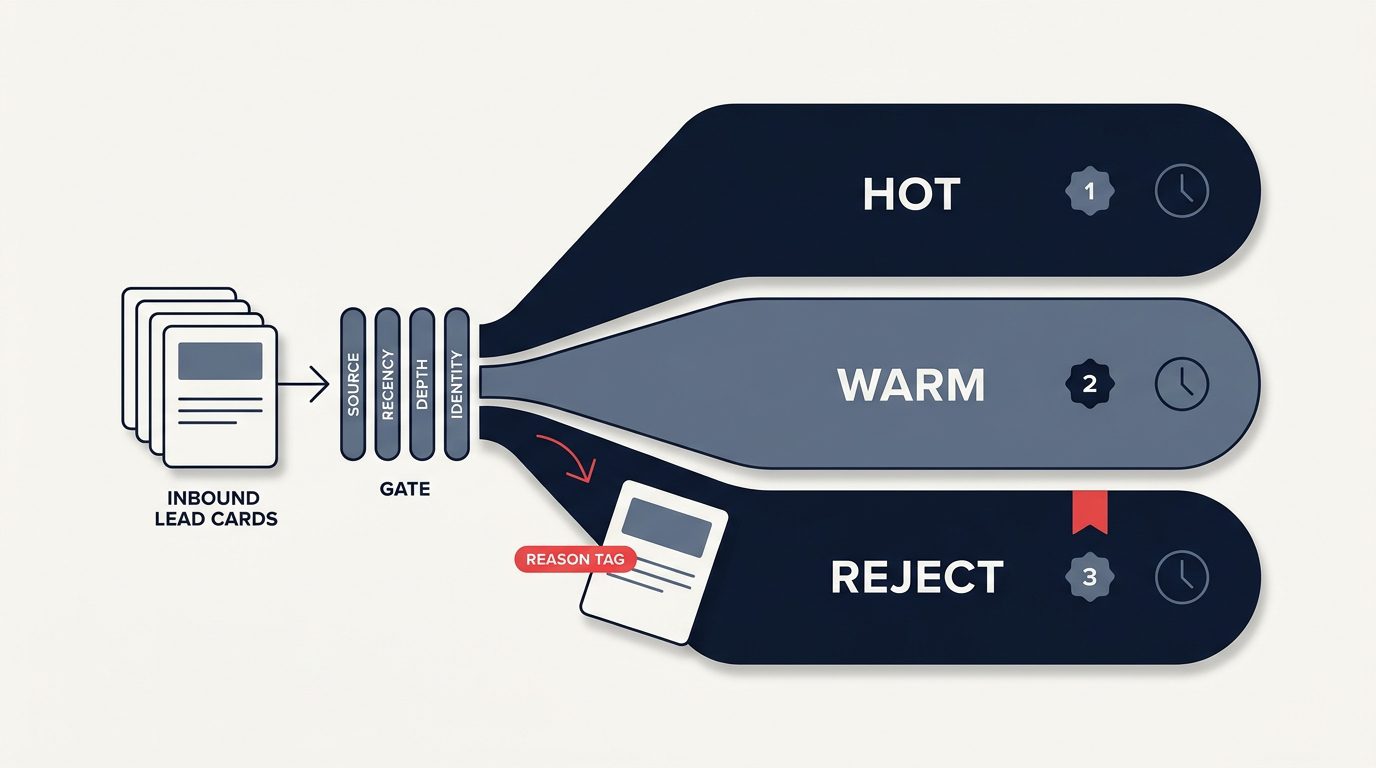
When you unbundle the demo, you are not asking SDRs to cold-call everyone who watched a tour. You are building a signal threshold. The person who watched the tour, visited pricing, and checked a competitor is ready. The person who watched 30 seconds and left is not. The response engine makes that call, and it does it in minutes instead of days, because a signal that sits in a queue decays fast.
This is also why the MQL is dead. A form fill at the end of a self-serve journey is a buying signal, not a lead score. You stop scoring people by how many emails they opened and start reading what they actually did. That is a fundamentally different measurement model, and it is the one the self-serve funnel rewards.
Start small. Take your single highest-performing gated asset and ungate it for 30 days. Put an interactive tour or a self-serve trial in its place. Watch what happens to reach, to time on page, and to the quality of the people who eventually do book a demo. I have yet to see a team do this and go back.
Unbundle the demo, capture the signal, and time the human touch. The form is not your funnel. The buyer’s behavior is.