





TL;DR
- The Real Problem: Your LinkedIn outreach is not getting ignored because of your hook. It is getting ignored because you are asking too early, before you have earned the right.
- The Premature Ask: The moment you pitch someone who barely knows you exist, the relationship resets to zero. One Like is not a signal, it is noise.
- The Fix: The Three-Touchpoint Rule. Engage, then share, then champion. Only after all three do you earn the right to ask for time.
- The Discipline: Score the signal before you move. Compound signals convert at 3-5x cold outreach, and they only build when you stop jumping tiers.
Your Hook Is Not the Problem
You sent a thoughtful, personalized DM. You mentioned their recent post. You asked a smart question. And then nothing. Left on read, again.
Your first instinct is to fix the hook. Tweak the subject line. Make the opening line shorter. Add more personalization. But here is what almost nobody tells you: the message was never the problem. The moment you sent it was.
You asked before you had earned the right to ask. You treated a complete stranger like a warm lead, and their radar caught it instantly. This is the premature ask, and it is the single most common reason B2B outreach dies on LinkedIn.
The data makes this worse than it feels. Buyers complete roughly two-thirds of their journey before they ever speak to a vendor, so by the time your DM lands, they have already decided whether you are relevant. Cold outreach reply rates sit around 1-2 percent across industries, according to HubSpot’s sales statistics. The premature ask is not just awkward. It is mathematically invisible.
Getting ignored on LinkedIn is rarely a copywriting problem. It is a timing problem. The ask came before the relationship, so the relationship never had a chance to form.
What the Premature Ask Actually Looks Like
The premature ask shows up in a few recognizable forms. The classic is the pitch disguised as a compliment. You write a warm opening line about their content, then pivot to a demo request by sentence three. The recipient sees the compliment for what it is: a toll booth on the way to the pitch.
Then there is the connection-request ambush. You send a neutral connection request, they accept, and within 24 hours the pitch lands in their DMs. Technically you did everything by the book. Psychologically, you burned the trust before it existed.
Finally there is the engagement-and-pounce. You like one of their posts, comment “great insights!” once, and then slide into their inbox to ask for 30 minutes. One Like plus one generic comment is not a relationship. It is the minimum viable signal, and buyers can smell the transaction underneath it.
All three share the same root cause: impatience. Traditional sales training says to strike while the iron is hot. But social selling runs on a different physics. On LinkedIn, the iron is not hot until the compound signal says it is. And the compound signal takes time to build.

| What You Did | What It Signals to the Buyer | What They Actually Feel |
|---|---|---|
| Pitched after one Like | “I am tracking your engagement” | Watched, not valued |
| Pitched in the first DM | “This connection was a setup” | Used, not respected |
| Pitched after 3 real touchpoints | “This person gets my world” | Understood, and open |
The Three-Touchpoint Rule
I built this rule during my three years at LinkedIn, and I have pressure-tested it more than a thousand times with over a hundred companies. It has never failed me. The rule is simple: three meaningful interactions before you ask for anything. No discovery calls. No demos. No “quick chats.” Three interactions that prove you are invested in their world, not extracting from it.
Comment on their content with something genuinely thoughtful. Not “great post.” Not a one-liner designed to get noticed. Add a real observation, ask a real question, or extend their point with your own experience. The goal is to signal that you understand their world.
Send them a resource that actually helps. An article that made you think of their specific challenge. A framework relevant to their work. A tool that could save them hours. Give first, with no string attached, and do not follow up asking if they read it.
Promote their work, their team, or their thinking to your own network. Share their post with a line about why it matters. This is the step almost everyone skips, and it is the one that separates a seller from a resource. You are publicly invested in their success, not yours.
Only after all three touchpoints, spread across days or weeks, not hours, do you earn the right to ask. And when you ask, the ask should reference the touchpoints. “I have been following your work on X, shared your article on Y, and loved your team’s approach to Z. If you are open to it, I would love 30 minutes to learn how you are thinking about this.”

One Like is not a signal. It is noise. The iron is not hot until the compound signal says it is.
Score the Signal Before You Move
The premature ask is really a failure of signal discipline. A single Like is a weak signal. It means someone scrolled past and tapped a button. It does not mean they want to talk to you. Yet sales reps treat it like a green light and rush the DM, then wonder why the pipeline stays empty.
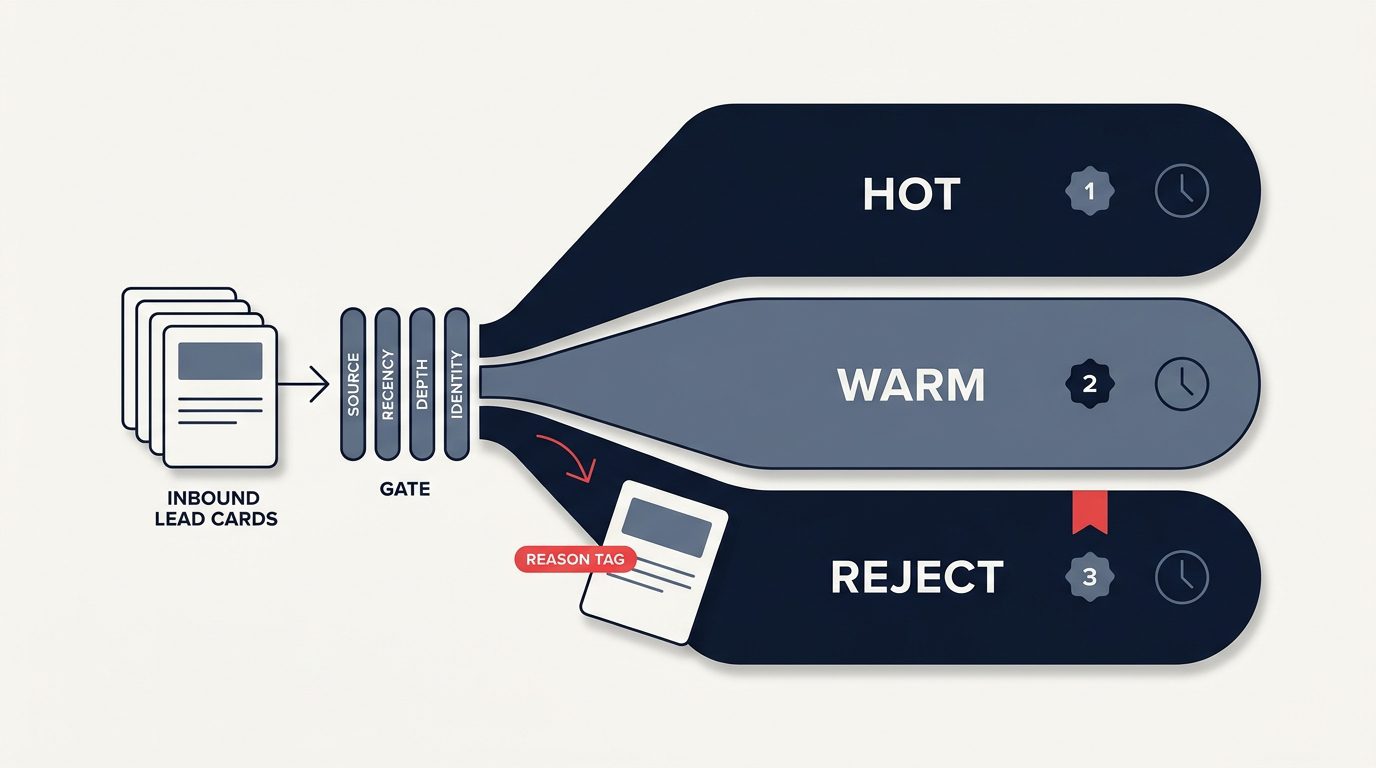
Here is how I actually score engagement before I act on it. A profile view is stronger than a Like, because it means they were curious enough to click through. A comment is stronger than both, because it means they engaged with your thinking. A compound signal, like multiple people from the same account engaging, or an executive plus a champion both showing up, is the strongest signal of all. That is when you move.
The discipline is brutally simple: do not jump tiers. If the engagement is below hot, you do not reach out. You nurture. You engage with their content. You wait for the compound. This is the part that feels inefficient to a traditional sales brain, and it is exactly the part that makes the methodology work.
| Signal | What It Means | Your Move |
|---|---|---|
| A Like | They noticed you, briefly | Nothing. Keep posting value. |
| A profile view | They were curious enough to click | Engage with their content once |
| A comment or reshare | They engaged with your thinking | Move to touchpoint two |
| A compound signal | Multiple signals, multiple people | Earn the ask, then ask |

What the Warm Ask Looks Like
The difference between a cold ask and a warm ask is not the words. It is the context. A cold ask interrupts. A warm ask continues a conversation that has already started. By the time you ask, the buyer has seen your name in their feed, formed an opinion about you, and there is a natural thread to pull.
There is a deeper principle underneath all of this that I call Add Value In Excess. The shorthand is a 5:1 ratio. If you want 30 minutes of someone’s time, provide five hours of genuine value first. Not five hours of content. Five hours of value, measured by how much it helps them. A personalized competitor analysis for their market. A warm introduction to someone who can solve their exact problem. A custom framework built for their situation.
The critical rule is zero expectation of return. The moment you add value with a string attached, it stops being value and becomes a transaction. This is where most people fail. They give once, wait 48 hours, and ask. That is not Add Value In Excess. That is aggressive gifting with a rebate demand.
The Quota Objection
Every time I teach this, someone pushes back: “I have a quota. I do not have three weeks to warm up a single prospect.” I get it. I have sat on the revenue side, and the pressure is real. But this objection confuses activity with progress.
A cold pitch might get you more conversations per week, but those conversations do not close. A social selling pipeline produces fewer meetings that close at significantly higher rates, with larger deals and shorter cycles, because the buyer arrives pre-educated and pre-sold. The metric that matters is revenue per unit of effort, not meetings per week. This is the same insight LinkedIn’s own social selling research points to: sellers who build relationships before the ask consistently outsell their peers.
The irony is that most reps spend more time chasing unresponsive cold leads than they would spend running three touchpoints with the accounts that actually matter. The premature ask feels faster. It is not. It just feels busy.
How to Operationalize This
You do not need expensive tools to run this. I built the entire methodology with nothing but a LinkedIn profile and discipline. Here is the weekly operating rhythm I use, and the one I teach my clients.
First, pick your targets. Narrow your list to the decision-makers who actually align with what you sell. Precision beats volume every time. Second, build your visibility. Post consistently so that when you do reach out, they have already seen your name and your thinking. Third, run the three touchpoints with discipline, logging each one so you never ask early. Fourth, score the signal and only move on compound signals.
This is the same system I write about in my guide to turning LinkedIn signals into pipeline, and it is the foundation of the engagement funnels I build for B2B teams. If you want the full four-phase program, from profile audit through manager enablement, you can find it on my B2B social selling page.
The Bottom Line
Stop rewriting your hook. Start fixing your timing. The message was never the problem. The moment was. Three touchpoints, spread across time, with no expectation of return, is the difference between being ignored and being invited in.
Social selling is not a faster cold call. It is a slower, denser pipeline where every opportunity carries more weight. Fewer meetings, higher close rates, larger deals. That is the trade, and it is worth it.
You do not earn the right to ask by sending a better message. You earn it by being visible, being useful, and being patient. Engage, share, champion. Then ask.