





TL;DR
- The Problem: Most teams buy their LinkedIn audience with ads, paying for discovery on every impression.
- The Signals: Company followers, company-post engagers, and executive-post engagers are behavioral signals you already own.
- The Framework: Signal stacking – layering organic engagement with ICP fit – creates a higher-intent audience than demographic targeting alone.
- The Economics: Organic audience creation reduces the paid media required to identify and reach high-value prospects.
- The Payoff: Paid media works best at the end of the strategy, accelerating people who already raised their hands.
Stop buying your LinkedIn audience. Build it first.
Most companies treat LinkedIn Ads like a fishing expedition. Define the ICP. Set the budget. Turn on the campaign. Ask LinkedIn to find people who look like your customer – right industry, right title, right company size – then hope they care enough to click.
The better approach starts with a different question.
Instead of asking, “Who looks like our customer?” ask, “Who has already demonstrated they care about what we have to say?” The smartest LinkedIn Ads strategy might not be an ads strategy at all. It is an organic audience strategy with paid media at the end.

Stop Paying for Audience Discovery
Traditional paid acquisition follows a predictable sequence: define ICP, buy impressions, generate clicks, find interested people, generate leads. Every step costs money. You pay for the right to discover whether someone is interested. And you pay that discovery cost on every impression, because most of the people you reach were never in the market.
The LinkedIn B2B Institute makes this concrete: only about 5% of B2B buyers are in-market at any given time. The other 95% are forming opinions about which vendors to trust – they are just not ready to buy today. Those opinions form somewhere. The question is whether you are present when it happens.
An organic strategy changes the economics. Instead of paying to discover interest, you earn it. Create valuable content, earn engagement, identify interested people, filter for ICP, nurture and convert – then use paid media selectively. The organic campaign does the audience discovery before you spend heavily on acquisition. You are not paying for every person you reach to find out whether they are interested. Their behavior tells you.
Organic audience creation can reduce the amount of paid media required to identify and reach high-value prospects – while producing a higher-intent audience, because engagement has already occurred.
Three Signals You Already Own
Every company has an organic audience sitting inside its LinkedIn presence, and it comes in three distinct pools. Each one is a different kind of behavioral signal.

- Company page followers – brand affinity. A follow says, “I want more from this company.”
- Company post engagers – content interest. A like or comment says, “This specific idea caught my attention.”
- Executive post engagers – thought-leadership affinity. Engaging with a person’s point of view says, “This perspective is relevant enough for me to interact with.”
The executive signal is the one most teams miss. Someone does not have to engage with your company to demonstrate interest in the category, the problem, or the point of view your executives represent. When your executives post about the space you play in, the people who engage are self-identifying. This is the same dynamic that powers strategic commenting and the signal-first content engine I have written about before.
What Each Signal Buys You
- Followers buy you owned reach and a pre-built retargeting base. Every follow is someone who opted into hearing from you again. Your organic posts start with distribution instead of zero, your future campaigns warm up faster, and when you do run ads you are not paying to re-identify people who already know you.
- Post engagers buy you message-level proof. Someone who liked or commented on a specific post consumed your actual message – not just your logo. They remember you, they are measurably more likely to click when you show up again, and their comments hand you qualitative gold: the questions, objections, and language your buyers actually use. Feed that straight back into your content and your sales scripts.
- Executive engagers buy you category access. This is the pool most companies ignore, and it is often the most valuable. People who engage with your executives are signaling interest in the problem space and the point of view – even when they have no relationship with your company page. In B2B, the decision-maker is often the person who follows a few sharp voices in their category rather than a vendor page. When they engage with your executive, they are in research mode, and you are the perspective being evaluated.
- Stacked signals buy you a scoring shortcut. When the same person appears across multiple pools, you have a behavioral scorecard no demographic filter can replicate. Multi-touch engagers are your warmest audience – the segment where a modest paid budget produces outsized conversion.
One caveat: none of these signals guarantee purchase intent. A follow is not a contract. An engagement is not a demo request. They are intent-adjacent signals – observed behavior instead of demographic assumptions. That is the honest version of the argument, and it is still a much better starting point than a cold audience.
| Signal | What It Says | Activation |
|---|---|---|
| Company followers | Brand affinity | Nurture |
| Company post engagers | Content interest | Relevant content |
| Executive post engagers | Thought-leadership affinity | POV and content |
| Product-content engagers | Product interest | Product education |
| Multiple engagements | Stronger signal | Lead generation |
| ICP + multiple signals | Highest-value audience | Conversion campaign |
Signal Stacking: The Framework
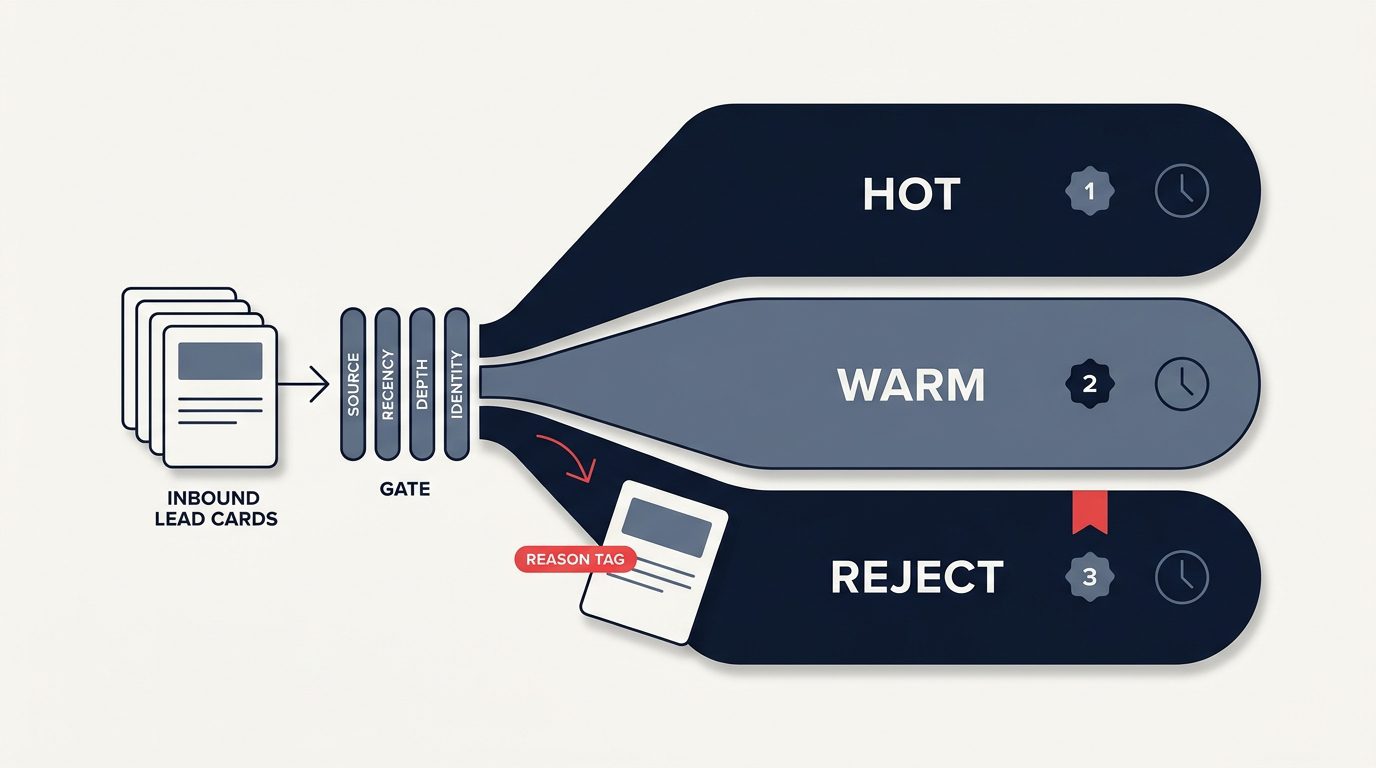
Here is where the strategy gets interesting. You do not assume everyone who engaged is a lead. You combine signals with fit. Organic engagement plus ICP fit equals a marketing-qualified audience.
Say 50,000 people engaged with your ecosystem over six months. That does not mean you have 50,000 prospects. But maybe 7,000 match your target industries, company sizes, job functions, and seniority. That is a completely different conversation – and it is one your ads budget will thank you for.
I call the layering process signal stacking. Someone who engaged once is interesting. Someone who engaged with three different pieces of content is more interesting. Someone who follows the company, engages with an executive, consumes product content, and fits your ICP is a completely different advertising prospect. Your best buyers were always signaling before they appeared in your CRM – you just were not collecting the signals.
The strategic shift is simple. Traditional targeting starts with, “Find VP Marketing at SaaS companies.” Signal stacking starts with, “Find VP Marketing at target SaaS companies who already follow us, engage with our content, or engage with our executives.”
You are no longer paying to introduce yourself to a theoretically relevant person. You are paying to accelerate an existing relationship. That fits how buyers actually move through the journey: they need different content at awareness, consideration, and decision stages. The signals tell you which stage someone is in.
The Flow: From Post to Pipeline
Here is the whole strategy on one screen. Content earns attention, attention produces signals, signals get filtered by fit, and paid media only enters at the end to accelerate what organic already built.
What I Actually Think
I ran LinkedIn Ads programs that generated 200-350 leads per month. Decent volume, real pipeline. But here is what the data kept showing: the highest-converting leads rarely came from cold targeting. They came from people who had already engaged with our content, our executives, or our brand – sometimes months earlier.
That experience is why I have built my own marketing around one engine instead of separate departments: content, social, SEO, and demand generation working together to create lead flow. Content creates attention. Engagement identifies who cares. The ICP filter tells you who matters. Paid media accelerates the people most worth converting.
I also spent years inside LinkedIn, where I built the social selling strategy from zero. I know how the platform’s targeting machinery works – and I know its limits. The biggest limit: demographic targeting tells you who someone is, not what they care about. Behavior is the better signal, and the platform is full of it if you stop treating followers and engagers as vanity metrics.
Here is the bet I would make: the best LinkedIn Ads audience is already sitting inside your organic audience. Stop asking LinkedIn to find strangers who might care. Start asking it to accelerate the people who already demonstrated that they do.
How to Run It
This is not just “posting on LinkedIn.” It is a coordinated stream of executive thought leadership, company content, product content, customer stories, educational content, industry POV, video, and events – multiple entry points into the same narrative. A three-content-types framework keeps the stream consistent without burning out your team.
Systematically collect everyone who likes, comments, engages, follows the company, or interacts with your executives and your content. This pool is worth more than reach, because every person in it has demonstrated some level of interest.
Filter the engaged pool against target industries, company sizes, job functions, and seniority. Engagement without fit is interest. Engagement with fit is opportunity.
Followers get nurture. Engagers get relevant content. Product-content engagers get product education. ICP matches with multiple engagements get lead generation. The highest-value stack gets the conversion campaign.
Now – and only now – do ads earn their keep. Use paid media to accelerate the highest-value segments instead of discovering them. The same budget goes further because you are not paying for discovery.

Stop using LinkedIn Ads to find your audience. Use organic marketing to build it first.
Don’t build your LinkedIn Ads audience from scratch. Build it from the attention you have already earned. Your executives create attention. Your company creates content. Your product creates interest. Your audience tells you who cares. Your ICP tells you who matters. And paid media accelerates the people who are most worth converting.